

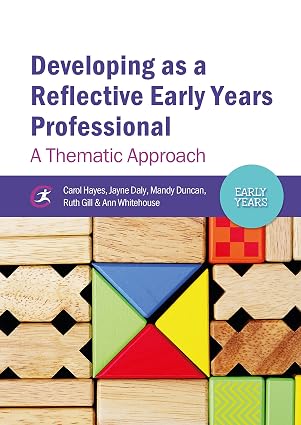
Description
1. Meaning of reflective practice
Reflective practice means carefully thinking about your own professional experiences, actions, decisions, and interactions in order to understand what happened and improve future practice.
For an early years professional:
Experience → Reflection → Learning → Improved practice
2. Why reflection is important
Early years practitioners work with young children and families in situations that can change constantly. Reflection helps practitioners:
- Understand their own practice
- Identify strengths and weaknesses
- Learn from experience
- Make better decisions
- Respond to children’s individual needs
- Improve the quality of education and care
The book explains that reflective skills can help practitioners and the early years sector respond confidently to changes in policy and practice.
3. Reflection and professional development
Reflective practice is an important part of becoming a competent and confident professional.
A practitioner should ask:
- What happened?
- Why did it happen?
- What did I do well?
- What could I have done differently?
- What have I learned?
- How can I improve next time?
4. Reflective teams
Reflection does not have to happen individually. Practitioners can reflect together as a team.
Team reflection can help professionals:
- Share experiences
- Discuss problems
- Learn from colleagues
- Challenge existing ideas
- Develop better approaches
The book highlights the importance of self-evaluation and being part of a reflective team.
5. Reflection and children’s development
Reflective practice helps practitioners provide more thoughtful and responsive experiences for young children and their families.
Practitioners can use research, observation, assessment, and professional experience to understand children’s needs and improve their practice.
6. Main themes
The book applies reflection to several important areas of early years work, including:
- Childhood poverty
- Observation and assessment
- Leadership
- Multi-professional working
- Early years practice
- Professional development
These themes demonstrate that reflection should be part of everyday professional practice, rather than something done only when a problem occurs.
Short exam answer
The Introduction to Developing as a Reflective Early Years Professional explains the importance of reflective practice in early years education. Reflective practice involves thinking critically about professional experiences, decisions, and actions in order to learn and improve future practice. It helps practitioners understand children’s needs, evaluate their work, develop professionally, and respond effectively to changes in the early years sector. Reflection can take place individually or within a team and should be supported by observation, assessment, research, and professional experience.
Key words:
Reflective practice → Experience → Self-evaluation → Learning → Professional development → Observation → Assessment → Team reflection → Children → Families → Improved practice.








Reviews
There are no reviews yet.