
Showing 571–600 of 1444 results

In the Castle
₨2,660.00Add to cartPart of the “Usborne Picture Books” series, this title lets young children follow the imaginative adventures of a little boy who is whisked back in time as he plays in the ruins of a castle, only to find himself transported to the hustle and bustle of the building in its heyday.

Individual Differences and Personality
₨11,400.00Add to cartThe book introduces the study of individual differences, which means understanding why people differ from one another in their personality, abilities, intelligence, emotions, motivation, and behaviour.
A major focus is personality—the relatively consistent patterns of thoughts, feelings and behaviours that make individuals different from one another. The book examines several theories of personality and also considers how personality can be measured and assessed using psychological tests

Information Systems
₨19,000.00Add to cartInformation systems are an essential part of modern business. They combine people, processes, information, and technology to help organisations perform work and achieve business objectives. Steven Alter’s book approaches information systems from a business perspective, rather than focusing only on the technical aspects of computers and software.
The book explains that technology by itself does not guarantee business success. Organisations must understand how information systems support and change the way work is performed, how they create value, and how managers can evaluate technology-related opportunities and problems. This is particularly important in e-business and e-commerce, where organisations increasingly depend on information technology for their operations and relationships with customers and suppliers.

Inspirational ideas: Free Time Activities 9-11
₨3,420.00Add to cartMolly Potter, author of Outside the box, has come up with some wonderfully entertaining activities, which are ideal for off timetable slots during the school day such as ‘golden time’, ‘treats’ at the end of term or, in fact, any time when you feel your pupils need a light-hearted break from the curriculum. This photocopiable book is packed with innovative, exciting and unusual activities such as an ‘intergalactic beauty contest’ ‘a noise scavenger hunt’ or ‘pencil olympics’! This photocopiable book is packed with innovative, exciting and unusual activities such as an ‘intergalactic beauty contest’ ‘a noise scavenger hunt’ or ‘pencil olympics’! They are the type of activity that busy teachers, no longer have the time or energy to create. For ease of planning, the books are organised according to the size of the group i.e. activities for a) individuals, b) pairs or small groups and c) whole group activities. As many of the activities demand that pupils work in pairs or groups there are plenty of opportunities for pupils to work together and support each other and thus develop their team-building skills – another very important aspect of these books. The range and scope of this book mean that after school club leaders or teachers will quickly be able to find an activity that suits their needs, depending on the amount of time available and the amount of noise and excitement they can tolerate!

Inspired Workspace: Designs for Creativity and Productivity
₨15,200.00Add to cartThe introduction asks us to think about the workplace as more than just a desk, office, or physical room. Zelinsky’s central idea is that the environment in which people work can influence their motivation, creativity, comfort, and productivity.
Main ideas
- The workspace affects performance
The design of a workplace can influence how people feel and how effectively they work. - Creativity needs the right environment
Creative people benefit from spaces that encourage inspiration, flexibility, experimentation, and interaction. - There is no single perfect workspace
Different professions and personalities require different environments. A designer, programmer, manager, or artist may need very different types of spaces.
- The workspace affects performance

Integrated Advertising, Promotion, and Marketing Communications,
₨17,480.00Add to cartThe introduction explains that modern marketing communication has evolved beyond traditional advertising into Integrated Marketing Communications (IMC)—a coordinated approach that delivers a consistent message across all communication channels. The authors argue that organizations must integrate advertising, digital media, social media, sales promotions, public relations, personal selling, and direct marketing to create a unified brand experience for customers.
The introduction also emphasizes that today’s consumers interact with brands through many touchpoints, making message consistency essential. It discusses how technological advances, globalization, and changing consumer behavior have transformed marketing communication, requiring marketers to use both traditional and digital media strategically.
Interactive Computer Graphics with WebGL
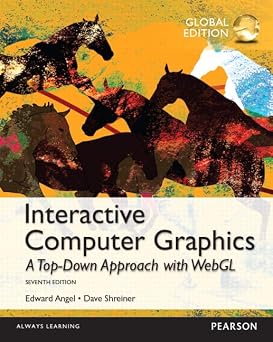
₨30,400.00Add to cartComputer graphics is the field of computer science concerned with creating, manipulating, and displaying visual images using computers. This book introduces the fundamental concepts of computer graphics through WebGL and JavaScript, allowing students to create interactive 2D and 3D graphics in a web browser.
The book follows a top-down, programming-oriented approach. Instead of beginning with complex mathematical theory, it gets students working with graphics early and gradually introduces the underlying concepts.

International and Comparative Human Resource Management
₨6,840.00Add to cartThe Introduction explains why International Human Resource Management (IHRM) has become increasingly important as organizations operate across national borders. Internationalisation of business, movement of labour and capital, and international employment regulation all make managing people across countries more complex.
Main points:
- What is International HRM?
IHRM is concerned with managing employees when organizations operate internationally. HR activities may include recruitment, selection, training, compensation, performance management, and employee relations.
- What is International HRM?
International Business
₨19,000.00Add to cartThe introduction explains that international business has become a defining feature of the modern global economy. Advances in technology, transportation, and communication have enabled companies of all sizes to operate across national borders, creating new opportunities as well as new competitive challenges. The author emphasizes that managers must understand how differences in political systems, economic environments, legal institutions, and cultures influence business decisions.
The introduction also highlights the importance of globalization and discusses both its benefits and criticisms. It explains that firms expand internationally to access new markets, obtain resources, improve efficiency, and gain competitive advantages. At the same time, businesses must address issues such as exchange-rate fluctuations, trade barriers, ethical responsibilities, and varying government regulations.

International Business
₨22,800.00Add to cartInternational business refers to the activities involved in conducting business across national borders, including the exchange of goods, services, technology, capital, and knowledge between countries. The introduction typically explains how globalization has transformed the way companies operate, creating opportunities for organizations to enter new markets while also exposing them to new risks and challenges.
It introduces the importance of understanding differences between countries, including:
- Economic systems and levels of development
- Political and legal environments
- Cultural values and business practices
- Currency and financial systems
- Trade policies and international regulations
The introduction emphasizes that companies engage in international business to access new customers, reduce costs, obtain resources, increase competitiveness, and achieve growth. It also explains that managers operating globally must make decisions about exporting, importing, foreign investment, partnerships, and international strategies while considering ethical, social, and environmental responsibilities.

International Business Strategy
₨21,280.00Add to cartThe introduction explains the importance of understanding how multinational enterprises (MNEs) develop and implement successful strategies in a global business environment. The author argues that international business strategy requires more than simply expanding into foreign markets; it requires a careful analysis of competitive advantages, locations, resources, and organizational capabilities.
Key ideas include:
- Purpose of international business strategy: The book aims to help students and managers understand how firms create and sustain success across national borders.
- Beyond traditional models: The introduction highlights that many common international strategy models may oversimplify complex global business decisions. The author presents a more integrated approach based on rigorous analysis and real-world business challenges
International Economics
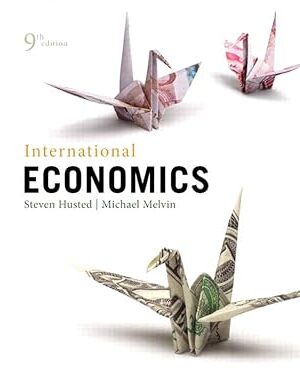
₨34,200.00Add to cartThe introduction explains that international economics studies the economic relationships between countries and how nations interact through trade, investment, and financial activities. It highlights that globalization has increased the importance of understanding international markets, trade agreements, exchange rates, and economic policies. The authors introduce the two main areas covered in the book: international trade, which examines the exchange of goods and services between countries, and international finance, which focuses on monetary systems, currency markets, and global financial relationships. The book aims to help students understand both the theoretical foundations and practical applications of international economics by connecting economic models with current global issues and policy debates.
International Economics
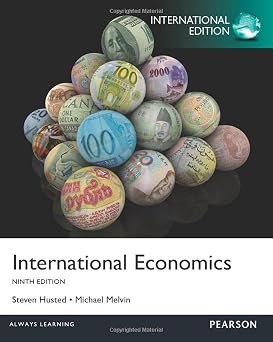
₨22,800.00Add to cartThe introduction explains the importance of understanding international economics in an increasingly interconnected world. It describes how countries are linked through the exchange of goods and services, international investment, financial markets, and the movement of resources across borders. The authors emphasize that global economic relationships influence businesses, governments, consumers, and workers.
The chapter introduces the two major areas of international economics:
- International trade — the study of why countries exchange goods and services, how trade creates benefits, and why governments sometimes restrict trade through tariffs, quotas, and other policies.
- International finance — the study of international payments, exchange rates, monetary systems, and how financial markets connect economies around the world.
The introduction highlights that international economic issues affect everyday life, from the prices of products and availability of goods to employment and government policy decisions. It also explains that economic models and real-world data are used throughout the book to analyze major global issues and policy debates.
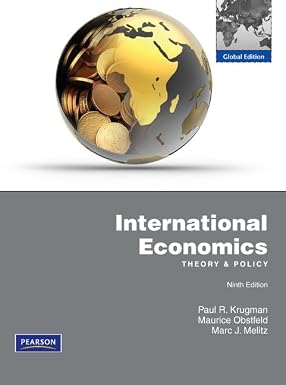
International Economics
₨9,120.00Add to cartThe introduction to International Economics explains why countries trade with one another and how international economic relationships affect businesses, consumers, governments, and economies.
The book is broadly divided into international trade and international finance/open-economy macroeconomics.
Main ideas:
- International trade: Countries exchange goods and services because they differ in resources, technology, productivity, and costs.
- Comparative advantage: Even when one country is more productive in everything, countries can still benefit from specializing in what they produce relatively efficiently and trading with others.
- Gains from trade: International trade can increase the variety of goods available and allow countries to use their resources more efficiently.
- Trade policy: Governments sometimes restrict or influence trade through tariffs, import quotas, export subsidies, and other policies.
- Exchange rates: International economics also examines how currencies are valued and how changes in exchange rates affect trade and the economy.

International Economics: Theory and Policy
₨11,400.00Add to cart- The introduction explains why international economics is important in understanding how countries interact through trade, finance, and global economic relationships. It introduces the idea that national economies are increasingly connected through the exchange of goods and services, movements of capital, and international financial markets.
- The authors present the two main areas of international economics:
- International trade — focuses on why countries trade, how trade benefits economies, how patterns of specialization develop, and how government policies such as tariffs and quotas influence trade.
- International finance — examines exchange rates, international payments, monetary systems, and how financial decisions connect economies around the world.
- The introduction emphasizes that international economic issues affect businesses, governments, and individuals. It explains that globalization creates opportunities for economic growth and efficiency but also raises debates about inequality, trade policies, financial stability, and the effects of international competition.

International Finance, Global Edition
₨26,600.00Add to cartInternational finance is the study of financial decisions and activities that cross national borders. It is especially important for multinational companies because exchange rates, international markets, different financial systems, and country-specific risks can significantly affect business decisions.
The book combines fundamental financial concepts with a managerial perspective, helping students understand how companies make informed financial decisions in international markets.
Main topics
- Globalization and multinational firms – how companies operate across countries.
- International monetary system – the structure and development of the global monetary system.
- Balance of payments – recording a country’s international economic transactions.
- Foreign exchange markets – how currencies are traded and exchange rates are determined.
- Exchange-rate relationships – purchasing power parity, interest-rate parity, and exchange-rate forecasting.
- Currency derivatives – futures, options, and other instruments used to manage currency risk.
- Foreign exchange exposure – managing the effects of exchange-rate changes on businesses.

International Financial Management
₨11,400.00Add to cartThe introduction explains that globalization has transformed the role of finance by making international financial decisions essential for businesses and investors. Companies operating across borders face challenges such as currency fluctuations, political and economic differences, international capital markets, and global competition. The authors introduce international financial management as the study of how firms make financial decisions in a worldwide environment while aiming to maximize shareholder value. The book focuses on providing students with a foundation in international finance concepts and practical decision-making tools, combining theoretical principles with real-world applications. It emphasizes the importance of understanding exchange rates, international markets, risk management, and financial strategies used by multinational corporations

International Financial Management
₨34,200.00Add to cartThe introduction explains that globalization has made international financial management an essential area of knowledge for businesses operating across national borders. Companies face opportunities and risks arising from foreign exchange markets, international investment, cross-border financing, and global capital flows. The authors emphasize that managers must understand how exchange rates, interest rates, financial markets, and country-specific risks influence business decisions. The book combines financial theory with real-world data, case studies, and practical applications to help students develop the analytical skills needed to evaluate international financial decisions and manage the risks associated with multinational business operations. It also introduces the structure of the book, which covers foreign exchange markets, international parity conditions, capital markets, multinational corporate finance, and foreign currency derivatives

International Human Resource Management
₨22,800.00Add to cartThe Introduction (Chapter 1) explains why managing people internationally is different from managing employees within one country. The book introduces International Human Resource Management (IHRM) and examines the challenges organizations face when employees and operations cross national borders.
1. What is IHRM?
International Human Resource Management (IHRM) is the management of people in organizations that operate across different countries.
It includes familiar HR activities such as:
- Recruitment and selection
- Training and development
- Performance management
- Compensation and rewards
- Employee relations
- Workforce planning
But these activities become more complicated when they involve different countries and cultures.

International Human Resource Management
₨19,760.00Add to cartThe introduction explains the growing importance of International Human Resource Management (IHRM) as organizations expand across national borders. It describes how globalization, multinational enterprises, technological change, and international competition have transformed the way companies manage their employees worldwide.
The chapter introduces IHRM as the process of managing people in organizations that operate internationally. It highlights that managing employees across countries is more complex than domestic HRM because organizations must deal with differences in:

International Law 2nd Edition
₨15,200.00Add to cartThe introduction presents international law as the body of rules and principles that governs relations in the international community. Although it is often described simply as law governing relationships between states, Klabbers explains that the subject is much broader and is influenced by political, diplomatic, social, and economic factors.
The book approaches international law through four basic questions:
- Where does international law come from?
This concerns the sources through which international legal rules are created, including treaties and customary international law.
- Where does international law come from?

International Marketing Strategy
₨15,200.00Add to cartThe book introduces international marketing and explains how organisations can successfully market their products and services in foreign and global markets.
International marketing is more complex than domestic marketing because businesses must consider differences between countries, including culture, consumer behaviour, economic conditions, laws, competition, currencies, political environments, and distribution systems.
The book is organised around three major stages:
- Analysis — understanding international markets, trading environments, cultures, and opportunities.
- Strategy development — deciding which markets to enter and developing strategies for globalisation, market entry, and international competition.
- Implementation — putting the strategy into practice through products, communication, distribution, pricing, logistics, and technology.

Interpersonal Communication: 2024 Release ISE
₨30,400.00Add to cartThe introduction explains that interpersonal communication is a central part of human life because the way people communicate influences their relationships, emotional well-being, personal success, and overall quality of life. The author introduces communication as more than simply exchanging information; it is a process through which people create meaning, develop connections, express emotions, and shape their understanding of themselves and others.
The introduction emphasizes that interpersonal communication skills can be learned and improved. Although people communicate every day, effective communication requires awareness of factors such as perception, culture, identity, emotions, listening, language, and nonverbal behavior. The book encourages students to examine their own communication habits and apply research-based concepts to real-life interactions.
Key themes introduced include:
- Understanding the fundamentals of communication
- How culture and gender influence communication
- The relationship between communication and the self
- Developing effective interpersonal skills
- Managing emotions, conflict, and relationships
- Understanding communication in both face-to-face and online environments

Introduction to Epidemiology
₨30,400.00Add to cartThe introduction explains epidemiology as the scientific discipline concerned with understanding the distribution, causes, and control of health-related events in populations. It introduces epidemiology as a key foundation of public health, focusing not only on diseases but also on injuries, behaviors, environmental exposures, and other factors that affect population health.
The author explains that epidemiologists study health problems by examining who is affected (person), where problems occur (place), and when they occur (time). These factors help researchers identify patterns, discover possible causes or risk factors, and develop strategies for prevention and control.

Introduction to Global Health
₨19,000.00Add to cartIntroduction to Global Health is a comprehensive textbook that introduces the major concepts, challenges, and solutions involved in improving health worldwide. It is designed for students and professionals in public health, nursing, medicine, allied health, and related disciplines who want to understand how health issues cross national borders and how global efforts address disease, inequality, and health promotion.
The book examines global health through a broad perspective, explaining how social, economic, environmental, political, cultural, and biological factors influence health outcomes. It highlights both current global health threats—such as pandemics, climate-related health risks, and emerging diseases—and the interventions being used to prevent illness, reduce disparities, and improve quality of life

Introduction to Health Behavior Theory
₨22,800.00Add to cartThe introduction explains the importance of understanding health behavior theories in promoting health and preventing disease. It presents theory as a structured way of explaining why people behave in certain ways and how those behaviors can be changed through evidence-based interventions. The author emphasizes that health behaviors are influenced by many factors, including individual beliefs, social relationships, community environments, culture, and broader social conditions.
The introduction describes health behavior theory as a foundation for health education and health promotion. By understanding the reasons behind behaviors, health professionals can design more effective programs that encourage positive changes, such as improving nutrition, increasing physical activity, reducing risky behaviors, and managing chronic disease.

Introduction to International Political Economy
₨38,000.00Add to cartThe introduction explains that international political economy (IPE) is the study of how political forces and economic systems influence one another in the global arena. It introduces the idea that global economic activities, such as trade, investment, production, and finance, are shaped not only by markets but also by governments, international organizations, social movements, and political decisions. The authors highlight that understanding the global economy requires examining different perspectives and theories, including liberalism, economic nationalism, and structural approaches. The book aims to help students analyze major international issues by connecting economic events with political and social factors and by showing how global economic changes affect countries, organizations, and individuals.

Introduction to Management Accounting
₨34,200.00Add to cartThe introduction presents quantitative methods as practical tools for using mathematics, statistics, probability and business modelling to understand problems and make better decisions in business, management and finance.
The book is designed to be accessible to students who may have little confidence or previous experience with mathematics. It uses step-by-step explanations, examples, exercises and practical activities.

Introduction to Public Health
₨21,280.00Add to cartThe introduction explains that public health focuses on protecting and improving the health of entire populations rather than treating only individual patients. It introduces public health as a multidisciplinary field that combines science, policy, social action, and community efforts to prevent disease and promote well-being. The author discusses how public health professionals use research, data, education, and interventions to identify health problems and develop solutions. The introduction also highlights that health is influenced by many factors, including social conditions, environment, behavior, economics, and political decisions. The book aims to help students understand the foundations of public health, the role of public health organizations, and the major challenges involved in improving population health.

Introduction to Systems Analysis and Design
₨13,680.00Add to cartThe Introduction explains how information systems are analyzed, designed, and developed to solve organizational problems and meet user needs.
1. What is a system?
A system is a group of related components that work together to achieve a purpose.
An information system normally involves:
- People
- Processes
- Data
- Technology