
Showing 1–30 of 357 results

100 Letters that Changed the World
₨12,920.00Add to cartThe introduction explains the power of written communication and how letters can preserve personal experiences while also shaping the course of history. The book presents letters not merely as private exchanges but as important historical records that reveal the thoughts, emotions, decisions, conflicts, and ambitions of people across different eras.
Key themes include:
- The influence of written words: The introduction highlights how a single letter can inspire change, alter political events, reveal personal struggles, or leave a lasting cultural legacy.
- Letters as historical evidence: Letters provide direct insight into the beliefs, relationships, and circumstances of people from the past, allowing readers to understand history through personal voices.
- A journey through time: The collection is arranged chronologically, beginning with early written records and continuing through modern history, showing how communication has evolved while remaining a powerful human tool.
- Personal stories behind major events: The book explores how individual letters connect with wider historical moments, including political movements, artistic achievements, social changes, and personal turning points.
- Diversity of voices: The selected letters represent a wide range of writers, from famous historical figures to ordinary people whose words had extraordinary consequences.

A Hunger to Kill: A Serial Killer
₨11,400.00Add to cartThe book opens with Detective Kim Mager reflecting on the 2016 case that would define her career. She introduces herself as a veteran detective in Ashland, Ohio, describing the challenges of being one of the few women in her department and how her upbringing prepared her for difficult police work. The narrative quickly shifts to a tense 911 call from a woman whispering that she has been abducted and is lying beside her sleeping captor, serial killer Shawn Grate. As officers race to locate her without alerting him, Mager foreshadows that this rescue will lead to an extraordinary series of interrogations in which she must gain the trust of a dangerous murderer and obtain confessions to multiple killings.

A Students Guide to IFRS
₨22,800.00Add to cartThe introduction explains that International Financial Reporting Standards (IFRS) are a common set of accounting standards used around the world to improve the consistency, transparency, and comparability of financial statements. Many accounting students find IFRS difficult because there are numerous standards, technical rules, and detailed disclosure requirements. The book aims to make these standards easier to understand.
Key themes introduced include:
- Learning IFRS effectively: The author emphasizes understanding the principles behind each standard rather than memorizing rules.
- Practical approach: The book explains not only what each IFRS requires but also why the standard exists and the business problems it addresses.
- Memory techniques: The guide uses colour coding, stories, illustrations, and memory aids to help students remember important requirements and apply them in examinations.
- Real-world application: IFRS is presented as an essential tool for preparing financial statements that investors, creditors, regulators, and other stakeholders can rely on.
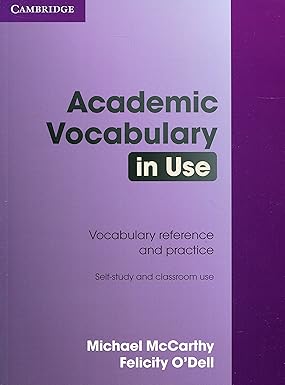
Academic Vocabulary in Use with Answers
₨10,640.00Add to cartThe introduction explains that academic study requires a specialized vocabulary that differs from everyday English. The book aims to help learners understand and use the words and expressions commonly found in academic textbooks, articles, lectures, and professional discussions.
Key themes include:
- Building academic vocabulary: The book introduces learners to the words and phrases frequently used across academic disciplines, helping them communicate ideas more accurately and effectively.
- Vocabulary in context: The introduction emphasizes learning words through authentic academic examples rather than memorizing isolated definitions.
- Support for different disciplines: Although vocabulary varies between fields, many academic words are shared across subjects such as science, engineering, business, law, and social sciences.
- Improving academic communication: Strong vocabulary skills help students participate confidently in seminars, understand academic texts, write assignments, and present ideas clearly.
- Independent learning: The book is designed for both classroom use and self-study, allowing learners to develop vocabulary systematically through explanations and practice activities.

Access To Health
₨28,880.00Add to cartThe introduction explains that health is a dynamic, lifelong process influenced by personal choices, behaviors, environments, relationships, and access to healthcare resources. The book encourages readers to become active participants in managing their own health by developing knowledge, critical-thinking skills, and healthy behaviors.
Key themes include:
- A holistic view of health: The introduction presents health as more than the absence of disease. It includes multiple dimensions such as physical, emotional, intellectual, social, spiritual, and environmental health.
- Personal responsibility and empowerment: Readers are encouraged to evaluate their own health behaviors, set realistic goals, and make informed choices that support long-term wellness.
- Health literacy: The book emphasizes the importance of understanding health information, evaluating health claims, and becoming a critical consumer of health products and services.
- Behavior change: The introduction highlights that lasting health improvements require awareness, motivation, planning, and gradual changes in daily habits.
- Prevention and wellness: A major focus is preventing illness and promoting healthy lifestyles through nutrition, physical activity, stress management, responsible decision-making, and risk reduction.
- Relationships and society: Health is influenced by family, culture, communities, and social conditions; building healthy relationships and communication skills contributes to overall well-being.

Acute & Emergency Care
₨24,320.00Add to cartThe introduction explains that athletic trainers are often the first healthcare professionals available when an athlete experiences an injury or sudden illness, making rapid assessment, clinical decision-making, and emergency management essential skills. The book emphasizes that effective emergency care requires a strong foundation in prevention, preparation, teamwork, assessment, and appropriate intervention.
Key themes include:
- The role of the athletic trainer in emergency care: Athletic trainers must be prepared to identify life-threatening conditions, provide immediate care, and coordinate with emergency medical services and other healthcare professionals.
- Evidence-based practice: The text emphasizes using current research, professional guidelines, and established standards to guide injury evaluation and treatment decisions.
- Emergency preparedness: A major focus is developing emergency action plans, understanding risk management, maintaining equipment, and ensuring that healthcare teams are ready to respond effectively.

Advanced Financial Accounting with Dynamic Accounting
₨9,120.00Add to cartThe introduction explains that advanced financial accounting builds upon the fundamental concepts of financial accounting and focuses on more complex reporting issues faced by modern organizations. It highlights the importance of understanding how accounting principles are applied to specialized situations, including mergers and acquisitions, consolidated reporting, international operations, and other complex business structures. The authors introduce the purpose of advanced accounting as helping students develop the ability to analyze, prepare, and interpret financial information in accordance with professional accounting standards. The book emphasizes a step-by-step approach, using examples, worksheets, schedules, and financial statements to help readers understand how advanced accounting procedures are developed and applied in practice.

Advertising and Promotion
₨15,200.00Add to cartThe introduction explains that advertising and promotion are important elements of modern marketing communication, helping organizations create awareness, communicate value, build brands, and influence consumer behaviour. The authors present advertising as more than a simple business tool; it is also a cultural and social practice that shapes meanings, identities, and relationships between brands and audiences. The book introduces the importance of understanding strategy, creativity, media choices, consumer responses, and the wider social effects of promotional activities. It aims to provide students with a critical understanding of how advertising works by combining marketing theory, industry examples, and perspectives from fields such as media studies and sociology.

Advertising Creative: Strategy, Copy, and Design
₨22,800.00Add to cartAdvertising creative is the process of developing ideas and messages that communicate a product, service, brand, or organization to a specific audience. This book explains how strategy, creativity, copywriting, design, and digital technology work together to produce effective advertising.
The 4th edition takes a post-digital approach, recognizing that advertising now operates across traditional media as well as websites, social media, mobile platforms, and other digital channels.
Main themes
- Creativity – generating original ideas that attract attention and communicate effectively.
- Advertising strategy – understanding the client, objectives, market, and target audience.
- Branding – creating a distinctive identity and message for a product or organization.
- Copywriting – writing persuasive words for advertisements.
- Design – using visual elements to communicate advertising ideas.
- Campaigns – coordinating advertising messages across different media.
- Digital and social media – creating content for websites, mobile platforms, and social communities.
- Ethics and legal issues – understanding responsibilities and restrictions in advertising.
- International advertising – adapting advertising to different cultures and markets.
- Business-to-business advertising – communicating with organizational rather than individual consumers.


An Introduction to Language
₨6,080.00Add to cartThe book introduces human language and linguistics—the systematic study of how language works. It explains that language is much more than simply a collection of words: it is a complex system with rules that allow people to create and understand an unlimited number of meaningful expressions.
The introduction prepares students to study several major aspects of language, including:
- What language is — the nature and characteristics of human language.
- The brain and language — how language is related to the human brain.
- Morphology — how words are formed and structured.
- Syntax — how words are organised into sentences.
- Semantics — how language conveys meaning.
- Phonetics and phonology — how speech sounds are produced and organised.
- Language acquisition — how children learn language.
- Language processing — how humans understand and produce language.
- Language and society — how language varies according to social and cultural factors.
- Language change and writing — how languages develop over time and how writing represents language.

An Introduction to Public International Law
₨45,600.00Add to cartThe introduction explains that public international law is the body of rules and principles that governs relations among states, international organizations, and other actors in the international community. It introduces the idea that international law influences many aspects of global affairs, including peace and security, human rights, international trade, environmental protection, and cooperation between nations.
Key themes include:
- Purpose and function of international law:
The introduction describes international law as a framework that helps regulate interactions between states, establish responsibilities, resolve disputes, and promote cooperation in a global society. - Nature of the international legal system:
Unlike domestic legal systems, international law operates in a decentralized environment where states play a central role in creating and applying legal rules. The text introduces the challenges and complexities of enforcing international obligations.
- Purpose and function of international law:

Analysis and Design
₨15,200.00Add to cartThe introduction explains that systems analysis and design is a structured process used to create effective information systems that support organizational goals. It presents the role of systems analysts as professionals who study business needs, identify problems, design solutions, and help organizations use technology to improve efficiency and decision-making.
Key themes include:
- Understanding information systems:
The introduction explains that modern organizations depend on information systems to collect, process, store, and distribute information needed for daily operations and strategic planning. - The role of systems analysts:
Systems analysts act as a bridge between business users and technology specialists. They investigate requirements, communicate with stakeholders, and design systems that meet user and organizational needs.
- Understanding information systems:

Analysis of Investments and Management of Portfolios
₨7,600.00Add to cartThe introduction provides a foundation for understanding investment analysis and portfolio management. The book focuses on how investors can evaluate investment opportunities and construct portfolios that match their risk and return objectives.
1. What is an investment?
An investment means committing money or other resources today with the expectation of receiving benefits or income in the future.
Examples include:
- Shares (stocks)
- Bonds
- Real estate
- Mutual funds
- Derivative securities
Applied Statistics in Business and Economics
₨38,000.00Add to cartThe introduction explains that statistics is a vital tool for making informed decisions in business, economics, and everyday professional life. Organizations rely on data to understand trends, evaluate performance, forecast outcomes, and solve problems. The book presents statistics as a practical discipline focused on collecting, organizing, analyzing, and interpreting data to support better decisions.
Key themes include:
- Statistics as a decision-making tool:
The introduction emphasizes that statistical methods help managers and analysts convert raw data into meaningful information for planning, problem-solving, and strategic decisions. - Data-driven business practices:
Modern businesses use data analysis to identify patterns, measure performance, understand customers, manage risks, and improve operations. - Descriptive and inferential statistics:
Readers are introduced to the distinction between summarizing existing data (descriptive statistics) and using sample data to draw conclusions about larger populations (inferential statistics).
- Statistics as a decision-making tool:
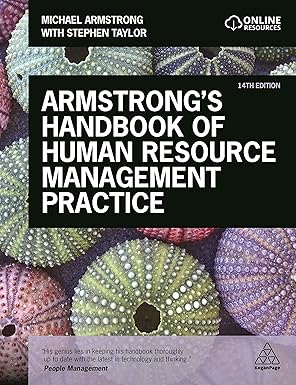
Armstrong’s Handbook of Human Resource Management
₨15,200.00Add to cartThe introduction explains that human resource management (HRM) is a critical function that focuses on managing people effectively to achieve both employee well-being and organizational success. It presents HRM as a strategic approach that goes beyond administrative tasks by helping organizations develop talent, improve performance, and create sustainable competitive advantage.
Key themes include:
- The purpose of HRM:
The introduction describes HRM as the process of acquiring, developing, motivating, and retaining employees while aligning people practices with organizational goals. - People as a source of organizational success:
The book emphasizes that employees’ knowledge, skills, creativity, and commitment are essential resources that contribute to organizational performance.
- The purpose of HRM:

Armstrong’s Handbook of Performance Management: An Evidence-Based Guide to Delivering High Performance
₨22,800.00Add to cartThe introduction explains that performance management is a continuous process for improving individual and organizational effectiveness. It emphasizes that managing performance is not simply about annual appraisals or judging employees; rather, it involves creating a shared understanding of goals, supporting employees, providing feedback, and developing capability to achieve better results.
Key themes include:
- Meaning of performance management:
Performance management is presented as a structured approach that links organizational objectives with individual and team contributions. It helps employees understand expectations and how their work supports broader business goals. - Beyond traditional performance appraisal:
The introduction explains that effective performance management is broader than periodic reviews. It includes ongoing conversations, coaching, feedback, learning, and support for improvement. - Alignment with organizational strategy:
A central purpose of performance management is ensuring that employee objectives are connected to the organization’s mission, priorities, and desired outcomes.
- Meaning of performance management:
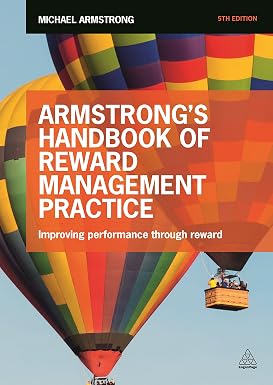
Armstrong’s Handbook of Reward Management Practice
₨15,200.00Add to cartThe Introduction presents reward management as an important part of human resource management. The basic idea is that organizations need effective ways to reward, motivate, recognize, and retain employees while also supporting organizational performance.
The book covers areas such as reward systems, strategic reward, motivation, performance-related rewards, financial and non-financial rewards, employee benefits, and reward management practice.
Main points:
- What is reward management?
Reward management is the process of developing and managing the policies and practices used to reward employees for their contribution. - Why is reward important?
An effective reward system can help an organization:- Attract talented employees
- Motivate employees
- Improve performance
- Retain valuable employees
- What is reward management?
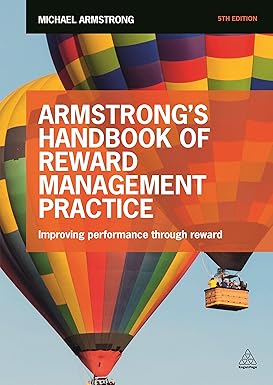
Armstrong’s Handbook of Reward Management Practice
₨30,400.00Add to cartThe introduction explains that reward management is a key part of human resource management because the way organizations reward employees influences motivation, engagement, retention, and performance. It presents reward not simply as payment for work, but as a broader system that includes financial rewards, benefits, recognition, development opportunities, and the overall employee experience.
Key themes include:
- Purpose of reward management:
Reward management aims to create fair and effective systems that attract, retain, and motivate employees while helping organizations achieve their strategic objectives. - Link between reward and performance:
The introduction emphasizes that well-designed reward practices can encourage desired behaviors, recognize contributions, and support improved individual and organizational performance. - Total reward approach:
Modern reward management includes both financial elements (such as pay, bonuses, and benefits) and non-financial elements (such as recognition, career growth, meaningful work, and work-life balance). - Strategic alignment:
Reward systems should be connected to business strategy and organizational values so that employee contributions support long-term goals
- Purpose of reward management:
Assessing Business Excellence
₨7,600.00Add to cartThe introduction explains the growing importance of business excellence as organizations face increasing competition, changing customer expectations, and the need for continuous improvement. It introduces the idea that excellence is not achieved through isolated improvements but through a structured approach that examines leadership, strategy, processes, people, resources, and results. The authors discuss how business excellence models, such as quality awards and self-assessment frameworks, help organizations understand their current performance and identify opportunities for improvement. The book aims to provide managers and students with practical guidance on using excellence frameworks to measure performance, encourage organizational learning, and achieve sustainable improvement.
Auditing and Assurance Services
₨10,260.00Add to cartThe introduction explains that auditing and assurance services play an important role in improving the reliability of financial and business information. Auditors help users of financial statements—such as investors, creditors, and managers—make informed decisions by providing independent evaluations of information and reporting on whether it is presented fairly according to applicable standards.
The authors introduce auditing as a systematic process of obtaining and evaluating evidence about assertions related to economic activities and events. The main purpose is to determine how closely the information being examined matches established criteria, such as accounting standards and regulatory requirements.

Balanced Website Design
₨26,600.00Add to cartThe introduction presents website design as a complex process. A good website should not simply look attractive; it must also be useful, easy to use, and capable of achieving its intended purpose.
The three main elements
1. Purpose
The website should have clear objectives. Designers need to understand why the website exists, who it is for, and what users should be able to accomplish.2. Usability
The website should be easy to understand and navigate. Users should be able to find information and complete tasks without unnecessary difficulty.
Basic Business Statistics
₨19,000.00Add to cartThe introduction explains why statistics is important in business and how statistical methods help managers make better decisions.
1. What is statistics?
Statistics is the science of collecting, organizing, presenting, analyzing, and interpreting data.
For example, a company may collect information about:
- Customer satisfaction
- Sales
- Prices
- Employee performance
- Advertising effectiveness
- Market demand
Statistics helps turn this information into useful conclusions.
2. Why businesses use statistics
Businesses operate with uncertainty. Managers cannot know exactly what customers will buy or what will happen in the future.
Basic Business Statistics
₨26,600.00Add to cartThe introduction explains that statistics is an essential tool for business professionals because organizations increasingly rely on data to make effective decisions. The book presents statistics not only as a set of mathematical techniques but as a way of thinking that helps managers understand uncertainty, identify patterns, evaluate alternatives, and solve business problems.
Key themes include:
- Statistics in business decision-making:
The introduction highlights how statistical analysis helps businesses transform raw data into useful information for planning, forecasting, controlling operations, and improving performance. - The role of data:
Modern organizations collect large amounts of information from customers, markets, employees, and operations. Statistics provides methods for organizing and interpreting this information to support better decisions. - Descriptive and inferential statistics:
The book introduces two major areas of statistics:- Descriptive statistics — methods used to summarize and present data through tables, charts, and numerical measures.
- Inferential statistics — methods used to make predictions or conclusions about a population based on sample data.
- Statistics in business decision-making:

Basic Marketing Research: Pearson New International
₨24,320.00Add to cartThe introduction explains that marketing research is the systematic process of collecting, analyzing, and interpreting data to support marketing decisions. Businesses use marketing research to understand customer needs, evaluate market opportunities, develop products, set prices, improve promotion strategies, and gain a competitive advantage. The book emphasizes a practical, hands-on approach that connects research activities with real business decision-making

Basic Statistics for Business & Economics
₨45,600.00Add to cartThe introduction explains that statistics is an essential tool for business professionals because organizations must make decisions based on data, uncertainty, and changing conditions. The book presents statistics as a practical method for collecting, organizing, analyzing, interpreting, and presenting information to support effective decision-making.
Key themes include:
- The role of statistics in business:
Statistics helps managers and analysts understand patterns, evaluate performance, forecast future outcomes, and make informed decisions using evidence rather than assumptions. - Data collection and analysis:
The introduction emphasizes that reliable statistical conclusions depend on properly collecting, organizing, and evaluating data from business environments. - Descriptive and inferential statistics:
The text introduces two major areas:- Descriptive statistics — methods for summarizing and displaying data using tables, charts, and numerical measures.
- Inferential statistics — methods for drawing conclusions or making predictions about a larger population using sample information.
- The role of statistics in business:
Becoming a Public Relations Writer
₨26,600.00Add to cartThe introduction explains that public relations writing is a strategic communication activity designed to build relationships between organizations and their audiences. It emphasizes that effective PR writing is not simply about producing clear text; it requires research, planning, understanding audiences, selecting appropriate communication channels, and creating messages that support organizational goals.
Key themes include:
- Strategic role of PR writing:
The introduction presents writing as one of the most important skills in public relations because written messages influence public understanding, reputation, relationships, and organizational outcomes. - Audience-centered communication:
Effective PR writers must understand their target audiences, including their needs, expectations, attitudes, and behaviors, before developing messages. - Research and planning:
The book emphasizes that successful public relations writing begins with gathering information, analyzing situations, setting communication goals, and developing appropriate strategies.
- Strategic role of PR writing:

Behavior modification
₨36,480.00Add to cartBehavior modification is the systematic application of learning principles to change behavior in meaningful ways. It is based on the idea that behavior is influenced by its environment and by the consequences that follow it. The field uses scientific methods to understand, measure, and modify behaviors rather than relying on assumptions or personal opinions.
The chapter introduces several key ideas:
- Behavior as a subject of study: Behavior refers to actions that can be observed and measured. Behavior modification focuses on changing specific behaviors rather than changing vague traits or labels.
- Behavioral problems: These may involve:
- Behavioral excesses — behaviors occurring too often or at inappropriate times (for example, excessive procrastination).
- Behavioral deficits — behaviors that occur too little or are missing (for example, inadequate study habits).
- Principles of learning: Behavior can be increased, decreased, or altered through processes such as reinforcement, extinction, and punishment.

Biochemistry: A Short Course
₨36,480.00Add to cartThe introduction explains the purpose and scope of International Relations (IR) as the study of political, economic, social, and security relationships among states and other global actors. The field examines how countries interact, how global systems are organized, and how conflicts and cooperation develop in an interconnected world.
Key ideas introduced include:
- Understanding global politics: International relations explores events and processes that shape the world beyond national borders, including diplomacy, war, trade, international organizations, and global challenges.
- Theories of international relations: The book introduces major theoretical approaches that help explain world politics, such as realism, liberalism, constructivism, and critical perspectives.
- Actors in world politics: While states remain central, the field also considers international organizations, multinational corporations, non-governmental organizations, social movements, and individuals.
- Traditional and emerging issues: The study of IR includes traditional concerns such as security and conflict, as well as newer issues such as globalization, human rights, environmental change, and global inequality.
- Critical analysis: The introduction encourages students to examine not only what happens in world politics but also why events occur and how different perspectives interpret them.

Building Moonshots: 50+ Ways To Turn Radical Ideas Into Reality
₨15,200.00Add to cartBuilding Moonshots introduces the idea that transformative innovations—often called “moonshots”—begin with ambitious visions that appear impossible at first but can become achievable through disciplined strategy, creativity, and execution. The book focuses on helping innovators, entrepreneurs, leaders, and organizations turn bold ideas into real-world products, services, and solutions.
The authors explain that solving major global challenges requires more than inspiration or a compelling vision. Successful moonshots require a mindset that combines curiosity, long-term thinking, experimentation, collaboration, investment, and the ability to learn from failure. The introduction frames innovation as a process of moving from imagination to action by creating pathways between today’s reality and a desired future.
The book presents more than 50 practical approaches organized around key stages of breakthrough innovation, including: