
Showing 271–300 of 357 results

Principles of Auditing: An Introduction to International Standards on Auditing
₨7,600.00Add to cartThe introduction explains that auditing is an essential process for creating trust and confidence in financial information. In modern economies, investors, governments, creditors, and other stakeholders rely on audited information to make decisions, and auditors provide an independent evaluation of whether financial statements are prepared fairly and according to accepted standards.
The authors introduce auditing as a systematic process of gathering and evaluating evidence to determine whether financial information meets established criteria. The introduction emphasizes that auditors must combine technical accounting knowledge, professional judgment, ethical principles, and an understanding of business environments.

Principles of Biochemistry: International Edition
₨45,600.00Add to cartThe introduction presents biochemistry as the study of the chemical processes and molecular interactions that make life possible. It explains that living organisms are built from molecules whose structures and reactions determine biological functions, from energy production and information storage to growth, reproduction, and adaptation.
The authors introduce the idea that understanding biology at the molecular level requires knowledge of chemistry. Biochemistry connects concepts from chemistry, biology, genetics, and physiology to explain how cells function and how biological systems are regulated.
Principles of Economics
₨19,000.00Add to cartThe introduction explains that economics is the study of how individuals, businesses, and governments make choices when resources are scarce. It presents economics as a way of thinking that helps people understand decisions, markets, and the allocation of limited resources.
The authors introduce the importance of using economic tools and ideas to analyze real-world issues. Economics helps explain why people make certain choices, how markets operate, why prices change, and how government policies can influence economic outcomes.

Principles of Information Security
₨6,080.00Add to cartPrinciples of Information Security examines the field of information security to prepare information systems students for their future roles as business decision-makers. This textbook presents a balance of the managerial and the technical aspects of the discipline and addresses knowledge areas of the CISSP (Certified Information Systems Security Professional) certification throughout. The authors discuss information security within a real-world context, by including examples of issues faced by today’s professionals and by including tools, such as an opening vignette and “Offline” boxes with interesting sidebar stories in each chapter. Principles of Information Security also offers extensive opportunities for hands-on work.
Principles of Information Security
₨11,400.00Add to cartThe opening chapter introduces the field of information security, which focuses on protecting information and information systems from unauthorized access, use, disclosure, disruption, modification, or destruction. It explains why information is one of an organization’s most valuable assets and why safeguarding it is essential.
Principles of Macroeconomics
₨34,200.00Add to cartThe introduction explains that macroeconomics is the study of the economy as a whole. It examines large-scale economic issues that affect societies, including overall production, employment, prices, economic growth, and the role of governments and financial institutions in shaping economic outcomes.
The authors introduce the idea that economic decisions made by individuals, businesses, governments, and central banks interact to influence national and global economies. Macroeconomics helps explain questions such as why some countries grow faster than others, why inflation occurs, why unemployment rises and falls, and how economic policies affect people’s lives
Principles of Microeconomics
₨22,800.00Add to cartThe introduction explains that economics is the study of how people, businesses, and societies make choices when resources are limited. The authors emphasize that economics is not only about money or markets but about understanding everyday decisions, trade-offs, incentives, and the consequences of choices.
The authors introduce the idea that every decision is an economic decision because individuals and organizations must decide how to use scarce resources. The introduction encourages students to develop economic intuition by examining real-world situations and asking how choices are influenced by costs, benefits, incentives, and constraints

Principles of Microeconomics ISE
₨34,200.00Add to cartThe introduction explains that microeconomics is the study of how individuals, businesses, and organizations make choices when resources are limited. It introduces economics as a way of thinking that helps explain everyday decisions, market outcomes, and how resources are allocated in society.
The authors emphasize that economic decisions involve trade-offs because people and organizations cannot have everything they want. Understanding these choices requires examining incentives, costs, benefits, and the effects of decisions on others.

Process Control Instrumentation Technology
₨39,520.00Add to cart1. What is process control?
Process control is the use of measurement, instrumentation, and control systems to monitor and regulate industrial processes automatically.
For example, in a chemical plant, the temperature of a reactor may need to remain at 200°C. A control system measures the actual temperature and adjusts heating or cooling to keep it near the desired value.
2. Why is process control important?
Process control helps industries achieve:
- Safety
- Consistent product quality
- Higher productivity
- Lower operating costs
- Reduced waste
- Efficient use of energy and materials
- Stable operation of equipment

Project Management
₨30,400.00Add to cartThe introduction explains that project management is the process of planning, organizing, directing, and controlling resources to achieve specific objectives within defined limits of time, cost, and quality. Projects are temporary activities designed to create a unique product, service, or result, and effective management is essential for achieving successful outcomes.
The authors introduce projects as complex activities that require coordination between people, technology, resources, and organizational goals. Unlike routine operations, projects have clear beginnings and endings and require careful planning to manage uncertainty and change.

Projects in Computing and Information Systems
₨19,000.00Add to cartThis book is the essential guide for any student undertaking a computing/IS project, and will give them everything they need to achieve outstanding results.
Undertaking a project is a key component of nearly all computing/information systems degree programmes at both undergraduate and postgraduate levels. Projects in Computing and Information Systems covers the four key aspects of project work (planning, conducting, presenting and taking the project further) in chronological fashion, and provides the reader with the skills to excel in the following essential areas:

Promotional Cultures: The Rise and Spread of Advertising, Public Relations, Marketing and Branding
₨9,120.00Add to cartThe introduction examines the idea of “promotional culture”—a society in which advertising, public relations, marketing, branding, lobbying, and other forms of promotion have become deeply embedded in everyday life. Davis argues that promotion is no longer limited to selling products; people, organizations, political ideas, celebrities, cultures, and even social movements can all become objects of promotion.
Main ideas
- Promotion is everywhere
Modern society is increasingly shaped by promotional activities. Businesses promote products, politicians promote policies and personal images, celebrities promote themselves, and organizations promote their identities. - Promotional culture has developed historically
Davis traces the growth of professional promotional activities such as public relations, advertising, marketing, lobbying, and branding, particularly during the twentieth century.
- Promotion is everywhere

Property Law 2019-2020
₨15,200.00Add to cartThe introduction explains the purpose of the statute book as a reliable and accessible collection of important property law legislation. It highlights that property law involves a wide range of legal rules governing ownership, interests in land, trusts, and related rights. The editor explains that the selected statutes have been carefully updated and organized to support students studying property law courses and preparing for examinations. The book is intended to be used alongside textbooks, lectures, and case law, helping readers locate and understand the relevant legal provisions efficiently. It emphasizes accuracy, practicality, and ease of use while providing essential legislative materials for understanding modern property law

Psychology
₨22,800.00Add to cartThe introduction explains that psychology is the scientific study of behavior and mental processes. It introduces psychology as a discipline that seeks to understand how people think, feel, learn, remember, develop, and interact with others through systematic research and evidence-based methods.
The authors emphasize that psychology is both a science and an applied field. Psychologists use scientific methods to investigate questions about human behavior and apply their findings in areas such as education, health, relationships, workplaces, and mental health.

Psychology in Modules
₨30,400.00Add to cartThe introduction explains that psychology is the scientific study of behavior and mental processes. It presents psychology as a discipline that seeks to understand how people think, feel, learn, develop, and interact with others by using scientific methods and evidence-based research.
The authors introduce psychology as a field that connects many areas of human experience, including biology, cognition, emotions, social relationships, personality, mental health, and cultural influences. Psychology helps answer questions about human behavior while challenging common assumptions through careful observation and research.
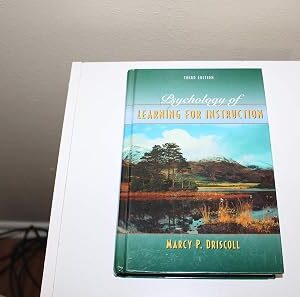
Psychology of Learning for Instruction
₨15,200.00Add to cartThe Introduction explains what learning is, what learning theories are, and why these theories are important for teaching and instructional design.
1. What is learning?
Learning is a relatively lasting change in knowledge, skills, attitudes, or behavior that results from experience or practice.
Learning is not simply memorizing information. It can involve:
- Understanding concepts
- Developing skills
- Changing behavior
- Solving problems
- Developing new ways of thinking

Public Law & Human Rights 2017-2018
₨15,200.00Add to cartThe introduction explains the purpose of the statute book as a practical and reliable collection of essential legislation for studying public law and human rights. It highlights that public law deals with the relationship between individuals, the state, and public authorities, while human rights law provides protections for fundamental freedoms and liberties. The editors explain that the statutes have been carefully selected, updated, and organized to support students in understanding key legal principles and preparing for examinations. The book is designed to be used alongside textbooks, lectures, and case law, providing quick access to important legislative materials relating to constitutional principles, administrative law, judicial review, and human rights protections

Public Law & Human Rights 2019-2020
₨4,560.00Add to cartThe introduction explains that the book is a carefully selected collection of UK public law and human rights legislation designed primarily for students. It aims to provide an up-to-date, reliable, and easy-to-use reference for study and examinations. The editor also explains that the statutes have been selected to match the needs of public law and human rights courses and should be used alongside textbooks and case law for a complete understanding of the subject.

PyStart: It’s Time to Code
₨3,800.00Add to cartIntroduction — simple summary
The introduction presents programming as a practical skill for solving real-world problems. The book is intended to give beginners a starting point in coding rather than assuming they already have programming experience.
The main ideas are:
- Coding is a problem-solving skill
Programming teaches you how to break a problem into smaller steps and give a computer precise instructions. - Learning by doing
PyStart emphasizes writing and experimenting with actual programs. The book includes more than 100 sample codes and coding projects.
- Coding is a problem-solving skill
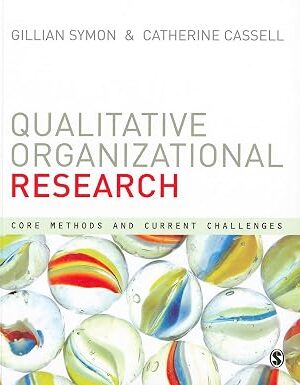
Qualitative Organizational Research
₨11,400.00Add to cartThe Introduction is titled “The Context of Qualitative Organizational Research.” It explains why qualitative research has become increasingly important in organizational studies and why researchers need to understand not only research techniques, but also the philosophical, ethical and practical issues involved in doing qualitative research.
Main ideas
- Qualitative research has become widely used in organizational research compared with earlier decades.
- It helps researchers understand people’s experiences, meanings, relationships, behaviour and interpretations within organizations.
- Organizational research can be complex because organizations involve people, cultures, relationships, power and changing environments.
- Researchers must carefully consider their research questions, participants, methods and interpretation of data.
- Qualitative research is not simply about collecting interviews or observations; it requires thoughtful decisions about how knowledge is produced and interpreted.
- Researchers need to consider ethics and reflexivity, including how their own position and assumptions may influence the research.
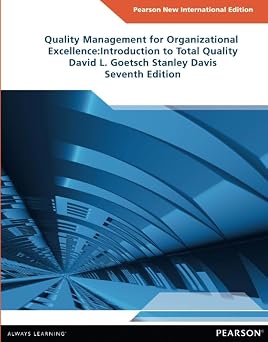
Quality Management for Organizational Excellence
₨34,200.00Add to cartThe introduction explains that quality management has become a critical factor in organizational success because customers, employees, and stakeholders increasingly expect higher levels of performance and value. The authors introduce Total Quality (TQ) as a comprehensive approach that involves every part of an organization working together to improve quality, productivity, and competitiveness. They emphasize that quality is not only about inspecting finished products but about creating effective processes, preventing problems, involving employees, understanding customer needs, and continuously improving operations. The book presents quality management as an organization-wide philosophy supported by leadership, teamwork, data-based decision-making, and a commitment to excellence. It aims to help students and professionals understand how quality principles can be applied to improve organizational performance in both manufacturing and service environments

Quantitative Chemical Analysis
₨34,200.00Add to cartThe introduction explains that quantitative chemical analysis is the science of determining what substances are present in a sample and how much of each substance is present. It emphasizes that analytical chemistry is fundamental to scientific research, medicine, environmental monitoring, manufacturing, food safety, and forensic science because reliable measurements are essential for informed decisions.
The authors describe chemical analysis as a systematic process that begins with defining the analytical problem and ends with interpreting and communicating reliable results. Accurate measurements depend not only on laboratory instruments but also on proper sampling, careful experimental design, calibration, quality control, and statistical evaluation of data.

Quantitative Methods for Business
₨38,000.00Add to cartThe book introduces quantitative methods as practical tools for solving business and management problems. It is designed for students with little or no previous knowledge and deliberately avoids unnecessary mathematical complexity.
1. What are quantitative methods?
Quantitative methods use numbers, mathematics, statistics, and analytical techniques to help managers understand situations and make better decisions.
In simple terms:
Business problem → Collect data → Analyze numbers → Find alternatives → Make a decision
2. Why are numbers important in business?
Managers regularly need to make decisions involving:

Quantitative Methods: for Business, Management and Finance
₨11,400.00Add to cartThe introduction presents quantitative methods as practical tools for using mathematics, statistics, probability and business modelling to understand problems and make better decisions in business, management and finance.
The book is designed to be accessible to students who may have little confidence or previous experience with mathematics. It uses step-by-step explanations, examples, exercises and practical activities.
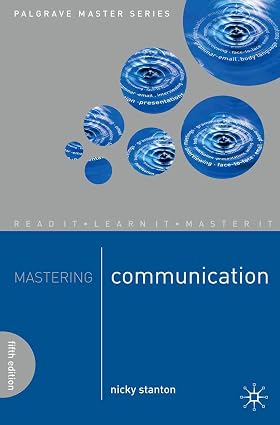
Red Globe Press Mastering Communication
₨13,680.00Add to cartCommunication is the process of sharing information, ideas, feelings, and meaning between people. Effective communication is important because success in study, work, and personal relationships depends not only on what we say or write, but also on how well we listen, understand, and respond.
Main topics
- The communication process – understanding how messages are created, transmitted, received, and interpreted.
- Speaking effectively – communicating ideas clearly and confidently.
- Listening – developing active and effective listening skills.
- Non-verbal communication – understanding body language, facial expressions, gestures, and other signals.

Relationship Marketing: Exploring Relational Strategies in Marketing
₨30,400.00Add to cartThe Introduction establishes relationship marketing as an approach that moves beyond simply making individual sales. The focus is on building, maintaining, and developing valuable relationships with customers and other stakeholders.
1. What is relationship marketing?
Relationship marketing is the process of creating and maintaining long-term relationships with customers and other important partners.
Traditional marketing often focuses on:
Make a sale → Move to the next customer
Relationship marketing focuses more on:

Resourcing and Talent Management
₨19,000.00Add to cartThe introduction explains that resourcing and talent management are among the most important functions of human resource management (HRM). Organizations depend on attracting, selecting, developing, and retaining talented employees to achieve their strategic goals and maintain a competitive advantage.
The introduction emphasizes the following key ideas:
- People are a strategic resource. An organization’s success depends largely on recruiting and retaining employees with the right knowledge, skills, and abilities.
- Resourcing is more than recruitment. It includes workforce planning, employer branding, recruitment, selection, onboarding, retention, succession planning, and managing employee exits.
- Talent management is strategic. Organizations need systematic approaches to identify high-potential employees, develop their capabilities, and prepare future leaders.

Routledge Communication Law
₨34,200.00Add to cartThe Introduction explains why law is essential to communication and mass media. Communication professionals operate within legal boundaries involving freedom of expression, privacy, intellectual property, advertising, broadcasting, and other areas.
1. What is communication law?
Communication law is the body of laws and legal principles that regulates communication through media such as:
- Television
- Radio
- Newspapers
- Internet
- Social media
- Advertising
- Telecommunications
It determines what people and organizations can and cannot legally communicate.

Routledge Integrating Science, Technology, Engineering, and Mathematics
₨19,000.00Add to cartThe book examines STEM integration—bringing Science, Technology, Engineering, and Mathematics together in school education rather than teaching each subject completely separately. Its focus is on how curriculum integration can help students connect classroom learning with the real world.
1. What is STEM integration?
STEM integration means connecting knowledge and skills from:
- Science — understanding the natural world
- Technology — using tools and technologies to solve problems
- Engineering — designing and creating solutions
- Mathematics — using numbers, patterns, measurement, and logical reasoning
The goal is to help students see how these subjects work together in real-life problems.

Schaum’s Outline’s UML
₨7,600.00Add to cartThe introduction explains that as software systems became larger and more complex, developers needed a common way to model and communicate system designs. The Object Management Group (OMG) developed UML as a standardized modeling language, and it has become the industry standard for object-oriented software development. The book aims to teach UML notation through practical examples and case studies rather than focusing only on theory.