
Showing 91–120 of 357 results

E-Marketing
₨26,600.00Add to cartThe introduction explains how the Internet and digital technologies have transformed traditional marketing. E-marketing uses online technologies to help organisations understand customers, create value, communicate with markets, and achieve business objectives.
Main ideas
- E-marketing is an extension of traditional marketing, using Internet-based technologies to support marketing activities.
- Digital technologies have changed how businesses communicate with customers and build relationships.
- Companies need an e-marketing strategy that is connected to their overall business strategy.
- Understanding online consumer behaviour is essential because customers search, compare, communicate and purchase differently online.
- Businesses can use digital channels for research, promotion, sales, distribution and customer engagement.

Early Childhood Music Therapy and Autism Spectrum Disorders
₨11,400.00Add to cartThe Introduction presents autism spectrum disorders (ASD) and explains how music therapy can support young children with ASD and their families. It also emphasizes research evidence, individualized intervention, and collaboration with families and other professionals.
1. Understanding autism spectrum disorders
ASD is a developmental condition involving differences in areas such as:
- Social interaction
- Communication
- Behaviour
- Learning and play
- Sensory experiences
The book emphasizes that children with ASD have different abilities, interests, strengths, and support needs, so interventions should be adapted to the individual child.
Economics for Business
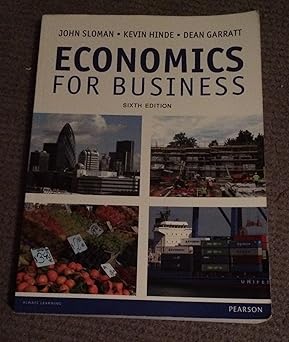
₨11,400.00Add to cartEconomics for Business introduces the relationship between economic theory and business practice. The book explains how firms operate within markets and how economic forces—such as consumer demand, competition, costs, government policies, and global events—affect business decisions and performance.
The introduction presents economics as a practical tool for understanding the challenges faced by businesses. It shows that managers need economic knowledge to make decisions about pricing, production, investment, strategy, employment, and responding to changes in the marketplace. The book connects economic concepts with real business situations, helping readers understand how theories apply in practice.
Economics for the Modern Built Environment
₨34,200.00Add to cartThe introduction, “Introduction and overview,” explains why the construction and property industries are important to national economies and why traditional construction economics needs to adapt to a changing world. The introduction is by Les Ruddock and covers pages 1–10.

Economics Today
₨15,200.00Add to cartThe introduction to Economics Today explains what economics is and why it is important in everyday life. Economics studies how individuals, businesses and governments make choices when resources are limited but human wants are unlimited.
Main ideas
- Scarcity is the fundamental economic problem. We cannot have everything we want because resources are limited.
- Because resources are scarce, people must make choices.
- Every choice involves an opportunity cost—the value of the best alternative that is given up.
- Economics studies how people and organisations decide what to produce, how to produce it, and for whom.
- Economic decisions are influenced by incentives, prices, income and available information.
- Economic principles can be applied to everyday decisions as well as business and government policy.
- The book uses real-world examples and applications to connect economic theory with practical situations.
Economics with MyEconLab
₨11,400.00Add to cartEconomics with MyEconLab introduces the fundamental principles of economics and explains how economic ideas can be applied to understand real-world decisions made by individuals, businesses, governments, and societies. The book provides a broad introduction to both microeconomics and macroeconomics, helping students understand how markets operate and how economic forces influence everyday life.
The introduction presents economics as the study of how limited resources are allocated to satisfy unlimited human wants. It emphasizes the importance of understanding choices, incentives, opportunity costs, markets, and the role of institutions in shaping economic outcomes. The book is written from a European perspective and connects economic theory with practical issues affecting businesses and economies.

Educational Psychology
₨3,800.00Add to cartThe book introduces educational psychology, which examines how psychological research can help us understand and improve learning, development, behaviour, teaching, and educational outcomes.
Woolfson takes a research-based approach. The book aims to help students:
- Understand the main concepts and theories in educational psychology.
- Examine how psychological research can be applied in classrooms and schools.
- Understand research methods and how interventions are evaluated.
- Learn how to read and critically evaluate journal articles rather than simply accepting research findings.
- Recognise that educational issues can be complex and controversial, with no single theory or intervention providing all the answers.
Electric Energy: An Introduction
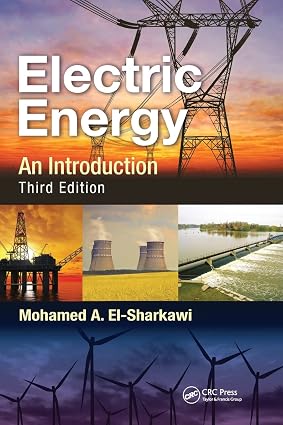
₨19,000.00Add to cartElectric Energy: An Introduction introduces the fundamental concepts of electrical energy systems, explaining how electricity is generated, converted, transmitted, distributed, and used in modern society. The book is designed for electrical and mechanical engineering students and provides a broad foundation in electric power systems, energy conversion, and emerging energy technologies.
The introduction presents electric energy as a critical component of modern life and emphasizes the engineering challenges involved in producing reliable, efficient, safe, and environmentally responsible power. It connects traditional power system concepts with current developments such as renewable energy, smart grids, energy efficiency, and the environmental impact of electricity generation
Electronic Commerce 2012
₨26,600.00Add to cartThe book introduces electronic commerce (EC) from a managerial perspective—what it is, how organizations use and manage it, and its opportunities, limitations, issues, and risks. Chapter 1 is “Overview of Electronic Commerce.”
1. Meaning of Electronic Commerce
Electronic commerce (e-commerce) is the use of electronic networks, particularly the Internet, to conduct business transactions and exchange products, services, information, and payments.
2. Main types
- B2C: Business → Consumer
- B2B: Business → Business
- C2C: Consumer → Consumer
- C2B: Consumer → Business
- B2E: Business → Employee
These categories describe the different parties involved in electronic transactions.
3. Why e-commerce is important
E-commerce enables organizations to:
- Reach customers globally
- Operate 24 hours a day
- Reduce some transaction costs
- Communicate quickly
- Improve customer convenience
Elementary Statistics: Picturing the World
₨30,400.00Add to cartElementary Statistics: Picturing the World introduces the fundamental concepts of statistics and shows how statistical methods can be used to understand, analyze, and interpret information from the real world. The book is designed to make statistics accessible to beginners by connecting mathematical ideas with practical examples, visual explanations, and everyday applications.
The introduction presents statistics as the science of collecting, organizing, analyzing, interpreting, and presenting data. It emphasizes that statistics is not only about calculations but also about developing the ability to make informed decisions and draw meaningful conclusions from data.
Embedded Linux Primer
₨21,280.00Add to cartThe introduction explains why Linux is useful for embedded systems and introduces the basic concepts needed to understand embedded Linux development.
1. What is Embedded Linux?
An embedded system is a computer system designed to perform a specific function as part of a larger device. Examples include:
- Consumer electronics
- Networking equipment
- Automotive systems
- Industrial controllers
- Mobile devices
- Medical equipment
Embedded Linux uses the Linux operating system as the software foundation for these specialized devices.
Embracing Uncertainty
₨7,600.00Add to cartEmbracing Uncertainty introduces the idea that uncertainty is an unavoidable part of life and that learning to accept it can lead to greater confidence, freedom, and emotional well-being. Susan Jeffers explores how fear of the unknown often prevents people from taking action, making decisions, and experiencing life fully. The book offers strategies for changing the way people respond to uncertainty rather than trying to eliminate it completely.
The introduction presents uncertainty not only as a source of anxiety but also as an opportunity for growth, creativity, and personal transformation. Jeffers encourages readers to develop trust in themselves, strengthen their ability to handle change, and replace constant worry with a more open and flexible approach to life

Emotional Mastery
₨3,040.00Add to cartThe introduction presents emotional mastery as the ability to understand, manage, and use your emotions rather than allowing emotions to control your decisions and behaviour.
The book begins from the idea that emotions such as anger, fear, sadness, love, and happiness affect almost every area of life—including relationships, personal development, career, health, and financial success.
Key ideas introduced:
- Emotions influence our lives: Emotional reactions can affect our choices, relationships, productivity, and ability to achieve goals.
- Awareness comes first: We need to recognize our emotional patterns and identify personal emotional hotspots.
- Past experiences matter: Unresolved emotional wounds can continue to influence present behaviour.
- Emotional intelligence is important: Developing the ability to understand and manage emotions can improve relationships and personal effectiveness.
- Emotions can be changed: The author presents practical methods for shifting unwanted emotional states rather than simply accepting them.
- Positive emotional states support success: The book introduces an Energy Diet aimed at maintaining a positive emotional flow state.
English Language Teaching Materials
₨15,200.00Add to cartThe introduction explains the importance of teaching materials in English language education and examines how materials influence the way languages are taught and learned. It highlights that materials are not simply textbooks or classroom resources; they reflect theories of language learning, teaching approaches, cultural values, and educational goals. The editor discusses the need for teachers and researchers to critically evaluate materials and consider how they can be adapted to different learners, contexts, and learning needs. The book brings together theoretical perspectives and practical examples to explore issues such as teacher-created materials, commercial textbooks, technology-based resources, and materials evaluation. Its aim is to help teachers develop a deeper understanding of how effective teaching materials can support successful language learning.

English Legal System
₨34,200.00Add to cartEnglish Legal System provides an introduction to how the legal system of England and Wales works. It explains where laws come from, who works within the legal system, how courts resolve disputes, and the basic concepts behind law and justice.

English Legal System
₨38,000.00Add to cartEnglish Legal System introduces the structure, principles, and operation of the legal system of England and Wales. The book is designed to help students understand how laws are created, interpreted, applied, and enforced, while also explaining the institutions and processes that shape the legal environment.
The introduction presents law as a dynamic system that develops through legislation, judicial decisions, constitutional principles, and the relationship between legal institutions and society. It explains that understanding the legal system requires knowledge not only of legal rules but also of how courts, Parliament, judges, lawyers, and other bodies contribute to the creation and administration of justice.
Enterprise Governance of Information Technology
₨26,600.00Add to cart1. What is Enterprise Governance of IT?
Enterprise Governance of Information Technology (EGIT) is the system of structures, processes, and responsibilities used to ensure that IT supports the organization’s business objectives.
The basic idea is:
Business strategy → IT strategy → IT investments → Business value
IT is no longer simply a technical support function. It has become an important enabler of business growth, sustainability, and competitive advantage.
2. Why IT governance is important
Organizations depend heavily on information technology. Therefore, senior management and boards need to make sure that IT:
- Supports business objectives
- Creates value
- Uses resources effectively
- Manages risks
- Protects information
- Meets compliance requirements
- Performs reliably
Entrepreneurs
₨6,080.00Add to cartEntrepreneurs: Talent, Temperament, Technique introduces entrepreneurship as a combination of personal qualities, learned skills, and practical methods rather than something people are simply born with. The authors argue that successful entrepreneurs identify opportunities, innovate, take calculated risks, and create value by combining talent with effective management techniques.
Entrepreneurs
₨6,080.00Add to cartAn entrepreneur is a person who identifies a business opportunity, develops innovative ideas, and takes the initiative to start and manage a business. Entrepreneurs are willing to take financial and personal risks in order to create products or services that meet customer needs and generate value. They play an important role in economic growth by creating jobs, encouraging innovation, and improving the standard of living. Successful entrepreneurs possess qualities such as creativity, leadership, confidence, decision-making ability, and perseverance. Entrepreneurship is considered a key driver of progress and development in today’s competitive global economy.

Equality: The Legal Framework
₨15,200.00Add to cartEquality is a fundamental principle of modern law and human rights. It means that people should be treated fairly and should not suffer unfair discrimination because of characteristics such as age, disability, race, religion, sex, or sexual orientation.
In this book, Bob Hepple examines how equality law works in practice and how the law attempts to prevent discrimination and promote equal treatment. The book places equality law within its wider political, economic, and social context.
A major focus is the UK Equality Act 2010, which brought together and harmonised different areas of anti-discrimination law. The second edition considers the Act’s early implementation, developments in the courts, enforcement issues, and possible future directions for equality policy

Equity & Trusts Law Directions
₨11,400.00Add to cartThe introduction explains that equity and trusts form an important part of the legal system by providing principles and remedies that supplement the common law. It introduces equity as a body of legal principles developed to achieve fairness and justice where strict legal rules may be insufficient. The author explains that trusts are a central feature of equity, allowing property to be managed by one person (the trustee) for the benefit of another (the beneficiary). The book aims to help students understand the relationship between legal rules, equitable principles, and practical applications through cases and examples. It emphasizes critical thinking by encouraging readers to examine how equity operates, how trusts are created and managed, and how courts apply equitable remedies in modern legal disputes
Esports Business Management
₨30,400.00Add to cartEsports Business Management introduces the rapidly expanding world of competitive video gaming (esports) and examines how it has developed from a recreational activity into a major global entertainment and business industry. The book explains the organizational, managerial, marketing, financial, legal, and operational aspects involved in running esports organizations and events.
The introduction presents esports as a field that shares similarities with traditional sports while also having unique characteristics. Unlike traditional sports, esports is strongly connected to digital platforms, game publishers, online communities, streaming technology, and rapidly changing technology. Understanding esports management requires knowledge of both sport management principles and the specific challenges of the gaming ecosystem.
Essential Economics for Business
₨11,400.00Add to cartEssential Economics for Business introduces the fundamental principles of economics and explains how they apply to real business situations. The book is designed for business and management students who need to understand how economic forces influence organizations, markets, consumers, and strategic decisions. It combines core microeconomic and macroeconomic concepts with practical business applications.
The introduction presents economics as a way of understanding how individuals, businesses, and governments make choices when resources are limited. It emphasizes that businesses operate within a wider economic environment shaped by market conditions, competition, government policies, technological change, and global developments.
Essential Quantitative Methods
₨19,000.00Add to cartEssential Quantitative Methods: For Business, Management and Finance introduces the mathematical and statistical techniques needed to support decision-making in business, management, and finance. The book is designed to help students understand how quantitative methods can be applied to analyze problems, interpret data, and make informed business decisions.
The introduction presents quantitative methods as practical tools rather than purely theoretical mathematics. It explains that managers and business professionals use numerical analysis to evaluate performance, forecast future trends, assess risks, allocate resources, and solve operational problems. The book emphasizes developing confidence with numbers through clear explanations, worked examples, and real-world business applications.
Essential Quantitative Methods
Read moreThe introduction explains that quantitative methods provide mathematical and statistical tools that help managers and businesses make objective decisions. Instead of relying only on intuition, organizations use data analysis to solve problems, forecast future trends, allocate resources, and evaluate business performance. The book is designed to present these techniques in a practical, easy-to-understand way with business-focused examples.
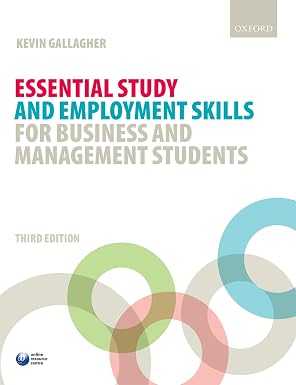
Essential Study and Employment Skills for Business and Management Students
₨15,200.00Add to cartThe introduction, “Setting the Scene: Study, Workplace and Development Skills,” explains why business and management students need to develop a broad range of academic, personal, and professional skills to succeed at university and in their future careers.
Key ideas include:
- Transition to university learning: The book introduces the importance of adapting to higher education by becoming an independent, active, and reflective learner.
- Developing transferable skills: It emphasizes that skills such as communication, teamwork, problem-solving, research, data handling, and self-management are essential not only for academic success but also for employment.
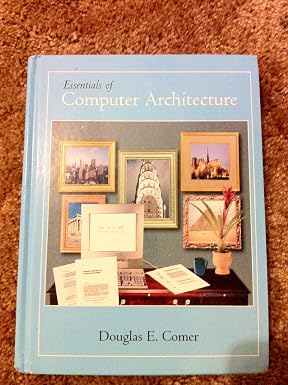
Essentials of Computer Architecture
₨22,800.00Add to cart1. Why study computer architecture?
Computers are everywhere—phones, cars, games, servers, etc. Software runs on this hardware. Understanding architecture helps programmers know how their programs actually execute and why some programs are faster or use less memory.2. Importance of architecture
Computer architecture explains the fundamental structure and operation of a computer, especially:- Processors (CPU) — execute instructions.
- Memory — stores programs and data.
- I/O systems — communicate with external devices.
The book focuses on these areas from a programmer’s point of view, rather than going deeply into hardware engineering.
3. Learning the essentials
The goal is to understand enough hardware concepts to write efficient and correct programs. Important programming-related concepts include binary representation, integer ranges, and two’s-complement arithmetic.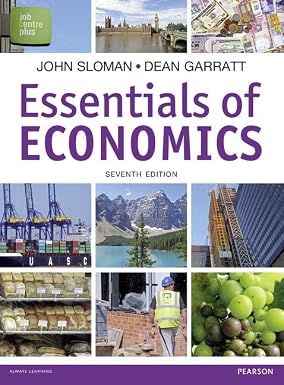
Essentials of Economics
₨19,000.00Add to cartEconomics is the study of how individuals, businesses, governments, and societies make choices about using limited resources to satisfy unlimited wants and needs. The book introduces both microeconomics and macroeconomics, using real-world examples to show how economic ideas apply to everyday decisions and business activities.
Main topics
- Basic economic principles – scarcity, choice, opportunity cost, and economic decision-making.
- Supply and demand – how markets determine prices and quantities.
- Consumer behaviour – how individuals make choices about goods and services.
- Firms and production – how businesses make decisions about production, costs, and profits.
- Market structures – competition, monopoly, and other types of markets.
- Government and the economy – taxation, government spending, regulation, and economic policy.
- Macroeconomics – national income, economic growth, unemployment, and inflation.
- Money and banking – the role of money, banks, and financial systems.
- International economics – trade, exchange rates, and the global economy.

Essentials of Life-span Development Ise
₨36,480.00Add to cartEssentials of Life-Span Development introduces the scientific study of human development across the entire lifespan, from conception and prenatal development through childhood, adolescence, adulthood, aging, and death. The book explains how people grow and change physically, cognitively, emotionally, socially, and culturally throughout life.
The introduction presents development as a lifelong, multidimensional, and multidirectional process influenced by biological factors, psychological experiences, social relationships, culture, and historical context. It emphasizes that human development involves both growth and change, with individuals continuing to adapt and develop at every stage of life.
Key themes introduced in the book

Essentials of Literacy from 0-7: A Whole-Child Approach to Communication, Language and Literacy
₨15,200.00Add to cartThe introduction explains that children’s literacy development begins long before formal reading and writing. Children develop the foundations of literacy through relationships, communication, play, movement, language, sounds, symbols and everyday experiences.