
Showing 61–90 of 357 results

Contemporary Sport Management
₨53,200.00Add to cartContemporary Sport Management introduces the field of sport management by explaining how sport organizations are planned, led, marketed, financed, and governed. The book demonstrates that managing sport involves more than organizing athletic events—it requires knowledge of business, leadership, law, marketing, finance, communication, and ethics.
The introduction explains that the sport industry is one of the world’s fastest-growing economic sectors, encompassing professional and amateur sports, collegiate athletics, community recreation, fitness organizations, sporting events, media, and sport-related businesses. Effective sport managers must balance organizational goals with the interests of athletes, fans, sponsors, governments, and communities.
Contemporary Strategy Analysis
₨19,000.00Add to cartRobert M. Grant combines a highly accessible writing style with a concentration on the fundamentals of value creation and an emphasis on practicality in this leading strategy text.
In this new edition several topics have increased emphasis including: platform-based competition and ‘ecosystems’ of related industries; the role of strategy making processes/practices; mergers, acquisitions and alliances; and additional emphasis on strategy implementation. Cases are completely updated to include companies which are prominent in the business press and well known to students (eg Amazon, Tesla, Tough Mudder, Tata Group, Samsung).
Contemporary Strategy Analysis: Text and Cases, 9th Edition combines the text with an updated collection of 20 case studies. It is suitable for both MBA and advanced undergraduate students.
Contemporary Tourist Behaviour
₨17,480.00Add to cartThe introduction explains that understanding tourist behaviour is essential for the success of the tourism industry. Tourists make decisions before, during, and after their trips, and these decisions are influenced by personal motivations, culture, social factors, economic conditions, technology, and environmental concerns. By studying tourist behaviour, tourism organizations can design better products, improve customer satisfaction, and promote sustainable tourism.

Corrections In The 21St Century
₨30,400.00Add to cartCorrections in the 21st Century introduces the role of corrections as a fundamental component of the criminal justice system. The book explains how correctional institutions and community-based programs seek to protect public safety, enforce legal sanctions, rehabilitate offenders, and support their successful reintegration into society. It emphasizes that modern corrections balance punishment, accountability, and opportunities for rehabilitation.
The introduction describes corrections as a dynamic field shaped by changing laws, public policy, research, technology, and social attitudes. It examines the challenges faced by correctional agencies, including prison overcrowding, offender rehabilitation, recidivism, mental health, substance abuse, and the need to ensure safety while respecting legal and human rights.
Cost Accounting
₨18,240.00Add to cartCost Accounting: A Managerial Emphasis introduces cost accounting as a key source of information for managers, helping them plan operations, control costs, evaluate performance, and make strategic decisions. The book emphasizes that cost accounting is not merely about recording costs; it is about providing relevant information that supports better management and organizational success.
A central idea introduced at the beginning of the book is “different costs for different purposes.” The authors explain that managers need different types of cost information depending on the decision they are making, such as pricing products, preparing budgets, evaluating investments, or improving operational efficiency. There is no single cost measure that is suitable for every managerial decision.
Cost Accounting, Global Edition
₨19,000.00Add to cartThe introduction explains that cost accounting is an essential part of managerial decision-making because it provides information that helps organizations plan operations, control costs, improve efficiency, and evaluate performance. The authors emphasize the central idea of the book: “different costs for different purposes.” They explain that managers need different types of cost information depending on whether they are setting prices, preparing budgets, measuring performance, or making strategic decisions. The introduction also highlights the importance of cost accounting in manufacturing, service, and nonprofit organizations, where accurate cost information contributes to better resource allocation and competitive advantage. The book combines theoretical concepts with practical examples and real-world applications to help students understand how cost accounting supports effective management in today’s business environment.
Critical Debates in Tourism
₨11,400.00Add to cartTourism is a major social, economic, cultural, and environmental activity. Critical Debates in Tourism examines tourism from a critical perspective, asking important questions about its benefits, problems, impacts, and future development.
Rather than presenting tourism as simply positive or negative, the book brings together different scholars to debate controversial issues in tourism

Critical Psychology
₨16,720.00Add to cartThe book introduces critical psychology, an approach that questions the assumptions of mainstream psychology. Instead of looking only at individuals and their behaviour, critical psychology asks how society, culture, power, inequality, politics, and institutions influence people’s experiences and psychological well-being.
The central idea is that psychology is not completely neutral or separate from society. Psychological theories and practices can reflect existing social values and power structures, but psychology can also be used to challenge oppression and inequality and promote social justice and human well-being.
Critical Thinking Skills: Effective Analysis, Argument and Reflection
₨11,400.00Add to cartCritical Thinking Skills introduces critical thinking as an essential academic and professional skill that enables people to evaluate information, construct sound arguments, solve problems, and make well-informed decisions. The introduction explains that critical thinking is not about criticizing others; rather, it is a disciplined process of questioning assumptions, examining evidence, recognizing bias, and reaching reasoned conclusions.
The author emphasizes that critical thinking can be learned and improved through practice. The book is intended to help students become more confident readers, writers, and thinkers by breaking complex reasoning processes into clear, manageable steps. It also highlights the growing importance of critical thinking in a world where people encounter large amounts of information from digital media, news, and academic sources.
Cryptography and Network Security
₨19,000.00Add to cartThe introduction to International Economics explains why countries trade with one another and how international economic relationships affect businesses, consumers, governments, and economies.
The book is broadly divided into international trade and international finance/open-economy macroeconomics.
Main ideas:
- International trade: Countries exchange goods and services because they differ in resources, technology, productivity, and costs.
- Comparative advantage: Even when one country is more productive in everything, countries can still benefit from specializing in what they produce relatively efficiently and trading with others.
- Gains from trade: International trade can increase the variety of goods available and allow countries to use their resources more efficiently.
- Trade policy: Governments sometimes restrict or influence trade through tariffs, import quotas, export subsidies, and other policies.
- Exchange rates: International economics also examines how currencies are valued and how changes in exchange rates affect trade and the economy.
Customer Relationship Management
₨22,800.00Add to cartThe introduction establishes why relationships between customers and organizations are important and how organizations can manage those relationships systematically.
1. Customer–supplier relationships
The first chapter looks at how relationships between customers and suppliers have developed. A relationship is more than a single purchase: it can involve repeated exchanges, trust, cooperation, communication, and mutual value.
The chapter considers:
- The history of customer–supplier relationships
- Different types of relationships
- How relationships develop and change over time
- The role of trust and commitment
- The importance of networks surrounding a customer and supplier

Daylight Science and Daylighting Technology
₨15,200.00Add to cartThe introduction presents daylight as a scientific and technological subject, rather than simply as natural light entering a building. Daylight is influenced by the Sun, atmosphere, sky conditions, buildings, windows, and human vision.

Death March
₨30,400.00Add to cartThe introduction explains the concept of a “death march” project—a software development project that begins with unrealistic demands, such as impossible deadlines, insufficient budgets, or inadequate resources. The author describes how these projects have become common in the software industry due to intense competition, rapid technological change, organizational pressure, and ambitious business goals. The introduction highlights that while such projects may aim for extraordinary results, they often create serious challenges for project managers and team members, including stress, reduced quality, and increased risk of failure. The book aims to help professionals recognize these situations, understand why they occur, and develop strategies to manage them more effectively while protecting project outcomes and team well-being.
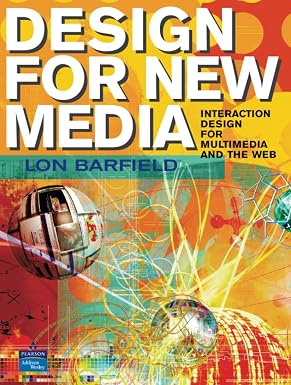
Design for New Media
₨34,200.00Add to cartThe opening chapter, “New Media and Interaction Design,” introduces the idea that new-media design is not just about making attractive graphics or using technology. It is about bringing different media elements together to create an effective interactive experience.
1. What is new media?
New media refers to digital and interactive forms of communication, such as:
- Websites
- Multimedia applications
- Interactive presentations
- Digital video
- Animation
- Interactive CD-ROMs and other digital products
The book describes new media as a combination of different elements—such as text, sound, images, animation, and video—that need to work together as one product.
Designing and Conducting Mixed Methods Research
₨38,000.00Add to cartDesigning and Conducting Mixed Methods Research introduces mixed methods research as an approach that combines quantitative and qualitative research within a single study to gain a more complete understanding of complex research problems. The authors explain that many research questions cannot be fully answered by numbers alone or by qualitative insights alone, making the integration of both approaches particularly valuable.
The introduction emphasizes that mixed methods research is more than simply collecting two types of data. It involves carefully planning how quantitative and qualitative methods will be integrated throughout the research process—from formulating research questions and selecting a design to collecting, analyzing, interpreting, and reporting findings.
Key themes introduced in the book
- Foundations of mixed methods research—understanding why and when to combine qualitative and quantitative approaches.
- Research design—selecting appropriate mixed methods designs based on the research question.
- Integration of data—combining numerical and narrative evidence to produce meaningful conclusions.
- Core mixed methods designs—including convergent, explanatory sequential, and exploratory
Designing, Delivering and Evaluating L&D
₨19,000.00Add to cartThe book introduces Learning and Development (L&D) as an important part of Human Resource Management. It explains how organisations can help employees and groups learn new knowledge and skills, improve their performance, and support organisational objectives.
The authors explain that L&D has changed significantly over time. It is no longer limited to traditional classroom training. Changes in technology, the workplace, globalisation and the way organisations operate mean that employees can learn through many different methods, including technology-supported and workplace learning.
Developing People and Organisations
₨38,000.00Add to cartThe book introduces the main ideas and theories used in Human Resource Development (HRD) and Organisational Development (OD). Its purpose is to help students understand how organisations can develop their people, structures, knowledge and performance.
Developing Skills for Business Leadership
₨26,600.00Add to cartThe introduction explains that business leadership requires more than technical knowledge. Successful leaders need a broad range of transferable skills, including communication, critical thinking, teamwork, decision-making, negotiation, self-management, and leadership. The editors emphasize that postgraduate education should prepare students not only to gain academic knowledge but also to develop professional capabilities that employers value. The book combines theory with practical application to help readers strengthen their leadership skills, improve professional effectiveness, and support continuing professional development (CPD). It also introduces the structure of the book, which covers postgraduate study skills, personal effectiveness, coaching, communication, financial awareness, leadership, problem-solving, and project management.

Development through Adulthood
₨11,400.00Add to cartThe book focuses on human development during adulthood and explains how people change psychologically, socially, emotionally, and cognitively as they move through adult life. It also considers important experiences such as relationships, parenthood, career, retirement, life crises, ageing, and bereavement.
Main ideas in the Introduction
- Adulthood is a period of development
Development does not stop when a person becomes an adult. People continue to change in their thinking, emotions, personality, relationships, values, and goals. - Development is influenced by life experiences
Events such as marriage, becoming a parent, starting or changing a career, retirement, crises, and loss can influence a person’s development. - Development is multidimensional
Adult development includes several interconnected areas:- Cognitive development
- Emotional development
- Motivation
- Personality
- Adulthood is a period of development
Digital Timescapes: Technology, Temporality and Society
₨10,640.00Add to cartDigital Timescapes: Technology, Temporality and Society introduces the idea that digital technologies have fundamentally reshaped how time is produced, experienced, and managed. The author argues that society has entered a new digital temporal regime, where smartphones, digital platforms, algorithms, and networked systems influence the pace, rhythm, and coordination of everyday activities.
The introduction explains that digital technologies enable instant communication, rapid access to information, online shopping, real-time navigation, and automated scheduling. While these innovations increase convenience and efficiency, they also create new pressures, such as expectations of constant availability, accelerated work, and reduced boundaries between personal and professional life.

Dimensions of Leisure for Life
₨38,000.00Add to cartDimensions of Leisure for Life introduces leisure as an important part of human life that contributes to health, happiness, personal growth, and community well-being. The book explains that leisure is more than simply free time—it includes meaningful activities, experiences, and choices that enhance quality of life and promote physical, emotional, intellectual, and social development.
The introduction emphasizes that leisure affects both individuals and society. It explores how recreation, sport, tourism, outdoor activities, arts, and hobbies help people build relationships, reduce stress, develop skills, and improve overall well-being. The text also highlights the role of leisure professionals in creating inclusive opportunities for people of all ages and abilities.
Discrete-Event System Simulation
₨7,600.00Add to cartThe book introduces simulation as a method for studying and analyzing systems when experimenting directly with the real system may be difficult, expensive, or impractical. It focuses particularly on discrete-event system simulation, where the state of a system changes at specific points in time because of events.
The introduction explains that simulation can be used to represent real systems such as manufacturing operations, queues, inventory systems, computer systems, and communication networks. The book emphasizes building models, collecting appropriate data, analyzing the model, verifying and validating it, and conducting experiments to understand system performance.
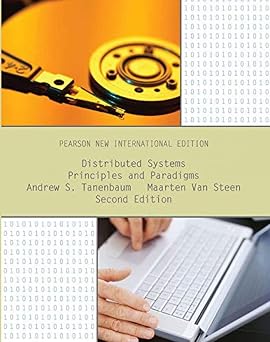
Distributed Systems: Principles and Paradigms
₨45,600.00Add to cartThe Introduction explains what distributed systems are, why they developed, and the main challenges involved in building them.
1. What is a distributed system?
A distributed system is a collection of independent computers that work together and appear to users as a single coherent system.
For example, when you use an online banking application, many different computers and servers may work together behind the scenes, even though you experience it as one service.
2. Why did distributed systems develop?
The authors explain that two major technological developments changed computing:
- Powerful, inexpensive microprocessors
- High-speed computer networks
These developments made it possible to connect many computers and have them cooperate rather than operate independently
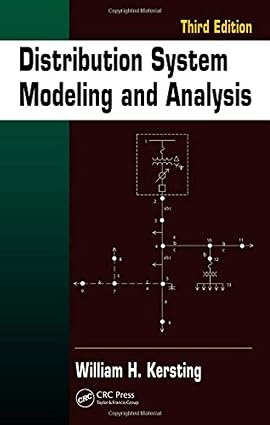
Distribution System Modeling and Analysis
₨34,200.00Add to cartThe introduction explains the basic structure of an electric power distribution system and prepares the reader for mathematical and computer modeling of distribution networks.
1. What is a distribution system?
A distribution system is the part of the electric power system that delivers electrical energy to customers.
The basic path is:
Generating station → Transmission system → Distribution substation → Distribution feeders → Consumers
2. Distribution substations
A distribution substation connects the higher-voltage power system to the local distribution network. It reduces voltage to levels appropriate for distribution feeders and customers.
3. Radial feeders
A radial feeder is a distribution circuit supplied from one source, normally a substation.
Power generally flows:
Diversity in Organizations
₨6,840.00Add to cartThe Introduction is in Part I, Framing Diversity in Organizations. It establishes why diversity is an important issue for modern organizations.
1. What is diversity?
Diversity refers to differences among people in organizations. These can include gender, age, ethnicity, culture, religion, disability, sexual orientation, and other characteristics.2. Diversity is more than individual differences
The book looks at diversity in its social, cultural, historical, political, and organizational contexts. Diversity can influence how people experience opportunities, relationships, power, and participation at work.
Doing Qualitative Research
₨19,000.00Add to cartQualitative research focuses on understanding people’s experiences, meanings, opinions, behaviours, and social interactions. Instead of mainly relying on numerical data, it commonly uses methods such as interviews, observations, focus groups, case studies, and analysis of texts or online data.
Main themes
- Research questions – developing clear and appropriate qualitative research questions.
- Research design – planning a research project and deciding how it will be conducted.
- Theory – understanding how theories guide qualitative research.
- Methodology – choosing suitable approaches and methods.
- Data collection – gathering information through interviews, observation, focus groups, and other sources.
- Data analysis – identifying patterns, themes, and meanings in qualitative data.
- Ethics – considering participants’ rights, privacy, consent, and responsibilities.
- Case studies – deciding how and why particular cases should be studied.
- Research quality – evaluating whether qualitative research is credible and well conducted.
- Research writing – preparing the literature review, methodology, findings/data chapters, and conclusion.

Dryden′s Handbook of Individual Therapy
₨17,480.00Add to cartDryden’s Handbook of Individual Therapy introduces the field of individual therapy by examining the major approaches used by counsellors, psychotherapists, and other helping professionals. The book presents therapy as a process in which trained practitioners help individuals understand their thoughts, emotions, behaviours, relationships, and life challenges.
The introduction emphasizes that individual therapy has developed through many different theoretical traditions, each offering its own explanation of human difficulties and its own methods for supporting change. Rather than presenting one approach as universally correct, the book explores the diversity of therapeutic models and encourages readers to understand their principles, applications, strengths, and limitations.

Dryden′s Handbook of Individual Therapy
₨15,200.00Add to cartThe introduction explains that individual therapy has developed through many different theoretical approaches, each offering its own understanding of human problems, psychological distress, and methods of helping clients. The book introduces readers to the diversity of counselling and psychotherapy practices by examining the history, theories, techniques, strengths, and limitations of various therapeutic models. It emphasizes that no single approach can fully explain every client’s experience, and therapists need to understand different perspectives to provide effective support. The handbook is designed to help counselling and psychotherapy trainees, as well as practitioners from related helping professions, develop a broad understanding of individual therapy and its application in practice

E-Logistics and E-Supply Chain Management
₨64,600.00Add to cartE-logistics is the use of information and communication technologies (ICT) to plan, manage, coordinate, and control logistics activities.
It connects traditional logistics processes with digital technologies such as:
- Internet and web applications
- Enterprise systems
- Cloud computing
- Electronic procurement
- RFID
- Online tracking systems
The purpose is to make logistics faster, more visible, coordinated, and efficient.