
Showing 151–180 of 357 results

Gower Handbook of Programme Management
₨11,400.00Add to cartThe Introduction explains the difference between project management and programme management and why programme management is important for organizations undergoing major change.
1. What is programme management?
Programme management is the coordinated management of a group or portfolio of related projects that together aim to achieve strategic organizational change and business benefits.
2. Project management vs. programme management
- Project management mainly focuses on delivering a specific product, service, or result.
- Programme management focuses on coordinating several projects to achieve broader organizational change and benefits.
So, a project asks: “What must we deliver?”
A programme asks: “What organizational change and benefits will these projects achieve?”
Grammar of the Edit
₨15,200.00Add to cartThe Introduction presents editing as a form of visual language. An editor takes individual shots and organizes them into a meaningful sequence so that the audience can understand a story, idea, or presentation.
1. What is editing?
Editing is the process of selecting, arranging, and combining recorded images and sounds.
Raw footage → Select shots → Arrange → Edit → Meaningful story
Editing is therefore much more than simply joining clips together.
2. Why editing is important
Editing allows the filmmaker to control:
- What the audience sees
- When information is revealed
- The pace of a scene
- Time and space

Great Writing 5
₨26,600.00Add to cartGreat Writing 5: Student Book with Online Workbook introduces advanced academic writing skills for English language learners who want to develop stronger sentence structure, paragraph organization, essay writing, and research-based writing abilities. The book is designed to help students move from basic writing skills toward more complex academic communication required in college and professional settings.
The introduction presents writing as a process that involves generating ideas, organizing information, developing arguments, revising drafts, and producing clear, effective final texts. Rather than focusing only on grammar, the book emphasizes how writers can communicate ideas logically, support claims with evidence, and adapt their writing for different academic purposes.
Handbook of Organizational Creativity
₨34,200.00Add to cartThe book introduces organizational creativity as the study of how new and useful ideas are generated, supported, and implemented within organizations. It brings together research from psychology, management, sociology, and related fields.
Main ideas
- What is organizational creativity?
Creativity in organizations involves producing new and useful ideas, products, processes, or solutions that can contribute to individual and organizational performance. - Creativity is not only an individual activity
The book emphasizes that creativity can be influenced by the work environment, teams, leadership, organizational culture, social networks, and management practices. - Historical development
The book reviews how research on organizational creativity has developed over time and explains major theories used to understand creative behavior.
- What is organizational creativity?

Health Communications Between Grit and Grace
₨19,000.00Add to cartLessons from bossy, caring, fearless, vulnerable, relentless, forgiving, smart, humble women at the top show readers how to fuel strengths, how to be fierce and feminine leaders, and how to nur

Health Policy: Application for Nurses and Other Healthcare Professionals
₨38,000.00Add to cartHealth Policy: Application for Nurses and Other Health Care Professionals, Third Edition provides an overview of the policy-making process within a variety of settings including academia, clinical practice, communities, and various health care systems. Health Policy takes a comprehensive structural approach to policymaking and provides the necessary tools to engage in health policy formulation. The Third Edition remains an easy-to-read foundational policy book that operationalizes health policy and politics and is one of the few health policy books that takes a civic competence model approach. It also provides the necessary tools to engage in health policy formulation and includes coverage of think tanks and expansion on policy institutes. Revised Appendices with current policy resources New Appendix: Major Federal Laws Executive Summaries Addition of Policy Terminology section at end of each chapter Policy Analysis Templates to help readers put skills into practice Summary Points and Policy Terminology emphasize critical content and terms Case studies and policy analysis templates bring concepts into the real world

Health Psychology
₨26,600.00Add to cartHealth psychology is the study of how psychological, social, biological, and environmental factors influence health, illness, and healthcare. The book takes a biopsychosocial approach, meaning that health cannot be understood by looking only at the body or disease; people’s thoughts, behaviours, relationships, culture, and social circumstances also matter.

Hole’s Human Anatomy & Physiology
₨26,600.00Add to cartThe introduction explains what anatomy (the study of body structure) and physiology (the study of body function) are and emphasizes that the two are closely connected. It introduces the concept of levels of organization in the human body—from atoms and cells to tissues, organs, organ systems, and the whole organism. The chapter also explains homeostasis, the body’s ability to maintain a stable internal environment, and describes how feedback mechanisms help regulate body functions. Finally, it introduces basic anatomical terminology, body planes, body cavities, and directional terms that students will use throughout the rest of the book.
How to Do Media and Cultural Studies
₨11,400.00Add to cartThe introduction explains that media and cultural studies help us understand how media shape society, culture, and everyday life. The book introduces students to the theories, research methods, and practical skills needed to investigate media and cultural issues. It emphasizes the importance of developing clear research questions, selecting appropriate research methods, and connecting individual projects to wider academic debates. The author also highlights that studying media is valuable because media influence communication, identity, politics, and culture, and the book aims to guide students through the entire research process—from planning a study to presenting the final project
Human Resource Development
₨45,600.00Add to cartHuman Resource Development (HRD) is the process of helping employees and organisations improve through learning, training, development, and effective management of knowledge. The book connects HRD with the broader idea of knowledge management, showing how organisations can develop their people while also creating and using organisational knowledge effectively.
The book gives particular attention to adult learning, because employees learn differently from children and often bring previous experience and knowledge to the workplace. It also examines how learning can take place through formal training, workplace experience, e-learning, blended learning, and work-integrated learning
Human Resource Management
₨26,600.00Add to cartThe introduction presents Human Resource Management (HRM) as the systematic management of people within an organization. The book emphasizes that effective HRM helps organizations achieve their goals while also addressing the needs of employees.
1. Meaning of HRM
Human Resource Management involves managing employees from the time they enter an organization until they leave.
It includes:
- Human resource planning
- Recruitment and selection
- Training and development
- Performance management
- Compensation and rewards
Human Resource Management 9th
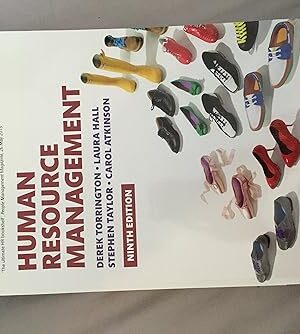
₨7,600.00Add to cartThe introduction explains that human resource management (HRM) is concerned with managing people in ways that help organizations achieve their objectives while also meeting the needs and expectations of employees. It describes how HR has evolved from a primarily administrative personnel function into a strategic discipline that contributes directly to organizational performance and competitive advantage. The authors emphasize that effective HRM requires balancing organizational goals with legal, ethical, and social responsibilities.
The introduction also outlines the major themes covered throughout the book, including:
- Recruitment and selection
- Learning and development
- Performance management
- Reward and compensation
- Employee relations and engagement
- Employment law
- Diversity and inclusion

Human Resource Management and Change
₨22,800.00Add to cartThe Introduction explains why human resource management (HRM) and organizational change are closely connected. Managers operate in an increasingly changing environment and must manage both organizational performance and people effectively.
1. Why organizations need to change
Organizations face continuous changes caused by:
- Globalization
- New technology
- Economic conditions
- Changing customer expectations
- Demographic changes
- New laws and regulations
- Changes in employee attitudes
The book describes these environmental pressures using the DELTA forces: Demographic, Environmental, Legal, Technological, and Attitudinal changes.

Human Rights Law Directions
₨21,280.00Add to cartThe introduction explains that human rights law is designed to protect the fundamental rights and freedoms of individuals while balancing those rights with the interests of society. It introduces the development of the European Convention on Human Rights and explains how the Human Rights Act 1998 incorporated Convention rights into UK law. The author highlights the importance of understanding how courts, public authorities, and governments apply human rights principles in practice. The book is intended to provide students with a clear and accessible guide to the key concepts, cases, and legal principles of human rights law, using practical examples and learning features to support study and examination preparation.

Images of Organization
₨34,200.00Add to cartThe introduction argues that we understand organizations through the mental images or assumptions we use to describe them. Morgan’s central idea is that no single theory can explain every organization. Different metaphors highlight different aspects of organizational life and can therefore provide different insights.
Main ideas
- Organizations are complex, so they cannot be fully understood from only one perspective.
- Managers and researchers often use metaphors to make sense of organizational situations.
- A metaphor can help us notice things that might otherwise be overlooked, but it can also distort our understanding if we treat the metaphor as the complete reality.

Implementing Change: Patterns, Principles and Potholes
₨6,080.00Add to cart- The introduction explains that implementing change in schools and organizations is a complex process because people respond to new ideas and innovations in different ways. Rather than treating change as a single event, the authors emphasize that it is an ongoing process requiring thoughtful leadership, planning, and support. They argue that many change initiatives fail not because the innovation itself is flawed, but because leaders underestimate the human side of change.
- The authors introduce the Concerns-Based Adoption Model (CBAM) as the book’s primary framework for understanding and managing change. Developed through decades of research, CBAM helps leaders understand individuals’ concerns about change, monitor how innovations are being implemented, and provide appropriate support at different stages of the implementation process.
The introduction also explains that the book combines research findings with practical tools, case studies, discussion questions, and field activities. Its goal is to help educational leaders, administrators, and change facilitators evaluate, guide, and sustain successful change efforts in schools and other organizations.

Individual Differences and Personality
₨11,400.00Add to cartThe book introduces the study of individual differences, which means understanding why people differ from one another in their personality, abilities, intelligence, emotions, motivation, and behaviour.
A major focus is personality—the relatively consistent patterns of thoughts, feelings and behaviours that make individuals different from one another. The book examines several theories of personality and also considers how personality can be measured and assessed using psychological tests

Information Systems
₨19,000.00Add to cartInformation systems are an essential part of modern business. They combine people, processes, information, and technology to help organisations perform work and achieve business objectives. Steven Alter’s book approaches information systems from a business perspective, rather than focusing only on the technical aspects of computers and software.
The book explains that technology by itself does not guarantee business success. Organisations must understand how information systems support and change the way work is performed, how they create value, and how managers can evaluate technology-related opportunities and problems. This is particularly important in e-business and e-commerce, where organisations increasingly depend on information technology for their operations and relationships with customers and suppliers.

Inspired Workspace: Designs for Creativity and Productivity
₨15,200.00Add to cartThe introduction asks us to think about the workplace as more than just a desk, office, or physical room. Zelinsky’s central idea is that the environment in which people work can influence their motivation, creativity, comfort, and productivity.
Main ideas
- The workspace affects performance
The design of a workplace can influence how people feel and how effectively they work. - Creativity needs the right environment
Creative people benefit from spaces that encourage inspiration, flexibility, experimentation, and interaction. - There is no single perfect workspace
Different professions and personalities require different environments. A designer, programmer, manager, or artist may need very different types of spaces.
- The workspace affects performance
Integrated Advertising, Promotion, and Marketing Communications,
₨17,480.00Add to cartThe introduction explains that modern marketing communication has evolved beyond traditional advertising into Integrated Marketing Communications (IMC)—a coordinated approach that delivers a consistent message across all communication channels. The authors argue that organizations must integrate advertising, digital media, social media, sales promotions, public relations, personal selling, and direct marketing to create a unified brand experience for customers.
The introduction also emphasizes that today’s consumers interact with brands through many touchpoints, making message consistency essential. It discusses how technological advances, globalization, and changing consumer behavior have transformed marketing communication, requiring marketers to use both traditional and digital media strategically.
Interactive Computer Graphics with WebGL
₨30,400.00Add to cartComputer graphics is the field of computer science concerned with creating, manipulating, and displaying visual images using computers. This book introduces the fundamental concepts of computer graphics through WebGL and JavaScript, allowing students to create interactive 2D and 3D graphics in a web browser.
The book follows a top-down, programming-oriented approach. Instead of beginning with complex mathematical theory, it gets students working with graphics early and gradually introduces the underlying concepts.
International and Comparative Human Resource Management
₨6,840.00Add to cartThe Introduction explains why International Human Resource Management (IHRM) has become increasingly important as organizations operate across national borders. Internationalisation of business, movement of labour and capital, and international employment regulation all make managing people across countries more complex.
Main points:
- What is International HRM?
IHRM is concerned with managing employees when organizations operate internationally. HR activities may include recruitment, selection, training, compensation, performance management, and employee relations.
- What is International HRM?
International Business
₨19,000.00Add to cartThe introduction explains that international business has become a defining feature of the modern global economy. Advances in technology, transportation, and communication have enabled companies of all sizes to operate across national borders, creating new opportunities as well as new competitive challenges. The author emphasizes that managers must understand how differences in political systems, economic environments, legal institutions, and cultures influence business decisions.
The introduction also highlights the importance of globalization and discusses both its benefits and criticisms. It explains that firms expand internationally to access new markets, obtain resources, improve efficiency, and gain competitive advantages. At the same time, businesses must address issues such as exchange-rate fluctuations, trade barriers, ethical responsibilities, and varying government regulations.

International Business
₨22,800.00Add to cartInternational business refers to the activities involved in conducting business across national borders, including the exchange of goods, services, technology, capital, and knowledge between countries. The introduction typically explains how globalization has transformed the way companies operate, creating opportunities for organizations to enter new markets while also exposing them to new risks and challenges.
It introduces the importance of understanding differences between countries, including:
- Economic systems and levels of development
- Political and legal environments
- Cultural values and business practices
- Currency and financial systems
- Trade policies and international regulations
The introduction emphasizes that companies engage in international business to access new customers, reduce costs, obtain resources, increase competitiveness, and achieve growth. It also explains that managers operating globally must make decisions about exporting, importing, foreign investment, partnerships, and international strategies while considering ethical, social, and environmental responsibilities.

International Business Strategy
₨21,280.00Add to cartThe introduction explains the importance of understanding how multinational enterprises (MNEs) develop and implement successful strategies in a global business environment. The author argues that international business strategy requires more than simply expanding into foreign markets; it requires a careful analysis of competitive advantages, locations, resources, and organizational capabilities.
Key ideas include:
- Purpose of international business strategy: The book aims to help students and managers understand how firms create and sustain success across national borders.
- Beyond traditional models: The introduction highlights that many common international strategy models may oversimplify complex global business decisions. The author presents a more integrated approach based on rigorous analysis and real-world business challenges
International Economics
₨34,200.00Add to cartThe introduction explains that international economics studies the economic relationships between countries and how nations interact through trade, investment, and financial activities. It highlights that globalization has increased the importance of understanding international markets, trade agreements, exchange rates, and economic policies. The authors introduce the two main areas covered in the book: international trade, which examines the exchange of goods and services between countries, and international finance, which focuses on monetary systems, currency markets, and global financial relationships. The book aims to help students understand both the theoretical foundations and practical applications of international economics by connecting economic models with current global issues and policy debates.
International Economics
₨22,800.00Add to cartThe introduction explains the importance of understanding international economics in an increasingly interconnected world. It describes how countries are linked through the exchange of goods and services, international investment, financial markets, and the movement of resources across borders. The authors emphasize that global economic relationships influence businesses, governments, consumers, and workers.
The chapter introduces the two major areas of international economics:
- International trade — the study of why countries exchange goods and services, how trade creates benefits, and why governments sometimes restrict trade through tariffs, quotas, and other policies.
- International finance — the study of international payments, exchange rates, monetary systems, and how financial markets connect economies around the world.
The introduction highlights that international economic issues affect everyday life, from the prices of products and availability of goods to employment and government policy decisions. It also explains that economic models and real-world data are used throughout the book to analyze major global issues and policy debates.
International Economics
₨9,120.00Add to cartThe introduction to International Economics explains why countries trade with one another and how international economic relationships affect businesses, consumers, governments, and economies.
The book is broadly divided into international trade and international finance/open-economy macroeconomics.
Main ideas:
- International trade: Countries exchange goods and services because they differ in resources, technology, productivity, and costs.
- Comparative advantage: Even when one country is more productive in everything, countries can still benefit from specializing in what they produce relatively efficiently and trading with others.
- Gains from trade: International trade can increase the variety of goods available and allow countries to use their resources more efficiently.
- Trade policy: Governments sometimes restrict or influence trade through tariffs, import quotas, export subsidies, and other policies.
- Exchange rates: International economics also examines how currencies are valued and how changes in exchange rates affect trade and the economy.
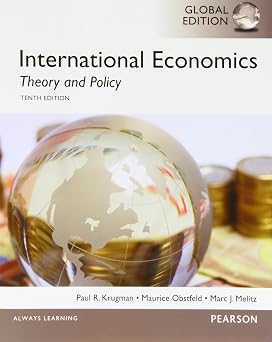
International Economics: Theory and Policy
₨11,400.00Add to cart- The introduction explains why international economics is important in understanding how countries interact through trade, finance, and global economic relationships. It introduces the idea that national economies are increasingly connected through the exchange of goods and services, movements of capital, and international financial markets.
- The authors present the two main areas of international economics:
- International trade — focuses on why countries trade, how trade benefits economies, how patterns of specialization develop, and how government policies such as tariffs and quotas influence trade.
- International finance — examines exchange rates, international payments, monetary systems, and how financial decisions connect economies around the world.
- The introduction emphasizes that international economic issues affect businesses, governments, and individuals. It explains that globalization creates opportunities for economic growth and efficiency but also raises debates about inequality, trade policies, financial stability, and the effects of international competition.

International Finance, Global Edition
₨26,600.00Add to cartInternational finance is the study of financial decisions and activities that cross national borders. It is especially important for multinational companies because exchange rates, international markets, different financial systems, and country-specific risks can significantly affect business decisions.
The book combines fundamental financial concepts with a managerial perspective, helping students understand how companies make informed financial decisions in international markets.
Main topics
- Globalization and multinational firms – how companies operate across countries.
- International monetary system – the structure and development of the global monetary system.
- Balance of payments – recording a country’s international economic transactions.
- Foreign exchange markets – how currencies are traded and exchange rates are determined.
- Exchange-rate relationships – purchasing power parity, interest-rate parity, and exchange-rate forecasting.
- Currency derivatives – futures, options, and other instruments used to manage currency risk.
- Foreign exchange exposure – managing the effects of exchange-rate changes on businesses.